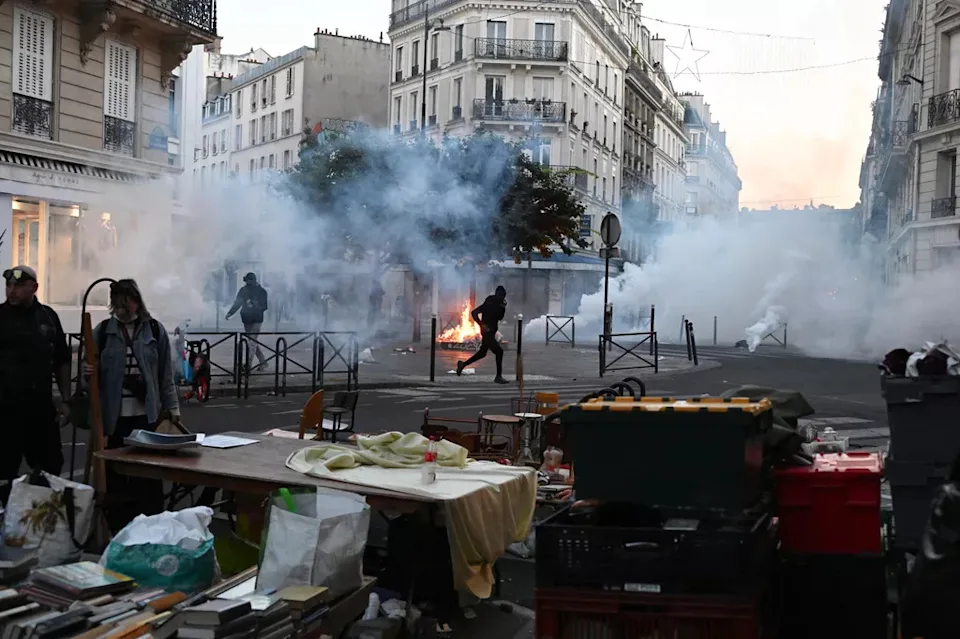
France is facing a wave of protests and street violence that has raised serious concerns about public safety, economic pressure, and the government’s response. Reports describe clashes in Paris and other cities, damaged shops, looting, fires, and attacks on public buildings. Luxury retailers such as Louis Vuitton and Rolex have drawn attention, while supermarket giant Carrefour has also reportedly been affected.
The protests, reported on October 17, 2026, were linked to concerns about the rising cost of living, shortages of teachers, and dissatisfaction with public services. What began as demonstrations escalated into violent confrontations in some areas.
Here are the key points to know:
- Massive demonstrations: Estimates vary, with reports citing approximately 550,000 participants and protest organizers giving a higher estimate of around 800,000.
- Arrests and injuries: Subsequent reports put arrests at more than 2,400, with close to 1,000 police officers reportedly injured. These figures may vary by reporting time and official counting methods.
- Businesses under attack: Shops, supermarkets, luxury retailers, and other commercial properties have reportedly suffered damage or looting.
- Political pressure: President Emmanuel Macron faces the challenge of restoring public order while addressing concerns about living costs, education, and public services.
- Wider European concerns: Protests and unrest have also been reported in other European countries, although their causes and circumstances differ.
Not every reported figure or claim has been independently verified. The number of affected stores, the extent of damage to individual luxury brands, and the precise circumstances surrounding some security measures remain subject to confirmation.
What Happened in France? How Protests Escalated Into Violence
Large crowds took to the streets on October 17 to protest issues including the rising cost of living, education resources, and the quality of public services.
In some locations, however, the demonstrations turned violent. Reports described looting, damaged storefronts, burning vehicles, and clashes between protesters and police.
The distinction between peaceful protest and criminal activity is important. People who join demonstrations do not necessarily support looting or arson, and violent acts committed by some individuals should not automatically be attributed to everyone taking part.
For residents and business owners, the consequences can extend far beyond the immediate clashes. Roads may become difficult to navigate, public transportation can be disrupted, and shops may close to protect employees and customers.
The situation presents two connected but separate challenges: public frustration over economic and social issues, and the immediate need to stop violence and protect people and property.
Louis Vuitton, Rolex, and Dior: Why Luxury Stores Are in the Spotlight
Luxury stores have become one of the most visible aspects of the unrest.
Reports have highlighted damage or attacks involving high-end retail locations associated with brands such as Louis Vuitton and Rolex. Dior has also attracted attention over reported security precautions.
However, these reports do not establish that every store belonging to these brands was attacked. The exact locations, financial losses, and extent of damage need to be assessed individually.
Why are luxury stores vulnerable during riots?
Luxury retailers often operate in busy shopping districts, where expensive merchandise is displayed behind large windows. If a storefront is damaged, goods can become vulnerable to theft.
When violence spreads through a commercial area, retailers may face several risks at once:
- Broken windows, damaged displays, and stolen merchandise
- Temporary closures and lost sales
- Additional security and property-repair costs
- Potential risks to employees and customers
- Insurance claims and investigations after the incident
Well-known brands often attract attention because their stores and products are instantly recognizable. But smaller retailers, restaurants, and neighborhood shops can suffer equally serious consequences, especially when they lack the financial resources of major international companies.
Did Dior hire mercenaries?
Some headlines have used dramatic language about Dior and security arrangements. Such wording should be treated cautiously.
Businesses facing unrest may increase security, close stores temporarily, protect merchandise, or arrange safer working conditions for staff. However, a headline alone is not enough to establish that a company formally hired mercenaries or armed personnel.
That claim would require reliable confirmation from the company or other credible evidence.
Carrefour: Reports of Attacks on Nearly 70 Stores
The unrest has reportedly affected more than luxury retail.
Carrefour, one of France’s major supermarket operators, has also been mentioned in reports about stores facing attacks or looting. Some coverage cited nearly 70 affected locations, although the precise geographical scope, reporting period, and definition of an affected store require further confirmation.
Damage to a supermarket can have consequences beyond the value of stolen goods.
Supermarkets supply food, household products, and other everyday necessities. If a store is damaged or forced to close, nearby residents may lose access to a convenient shopping location. Disruptions to warehouses, deliveries, and restocking can create additional problems.
Retailers must also consider employee safety. Even when a building has not been seriously damaged, a store may need to close if violence continues nearby.
The reported incidents highlight how unrest can affect the wider economy, including essential retail services, local communities, and distribution networks.
Why Are People Protesting? The Cost of Living, Education, and Public Services
Understanding the unrest requires looking beyond images of burning vehicles and damaged storefronts.
Reports have identified three broad areas of public concern: living costs, education resources, and the quality of public services.
These issues may contribute to public frustration, but they do not explain every individual’s motivation, nor do they justify violent acts.
1. The rising cost of everyday life
Housing, food, energy, and transportation can place considerable pressure on household budgets.
When essential expenses rise faster than a family’s ability to absorb them, people may feel that their standard of living is deteriorating—even if headline economic indicators do not show a complete downturn.
Public dissatisfaction can deepen when people believe the government is not responding effectively or that economic burdens are being distributed unfairly.
However, the extent of financial pressure needs to be assessed through data on prices, wages, and household spending rather than inferred from demonstrations alone.
2. Teacher shortages and education concerns
Reports have also referred to shortages of teachers in French high schools.
When schools struggle to recruit or retain enough teachers, existing staff may face heavier workloads, students may experience disruptions, and school administrators can find it harder to maintain normal teaching schedules.
Education problems are rarely solved by a single decision. They can involve funding, recruitment, working conditions, regional differences, and long-term planning.
When concerns about schools overlap with wider dissatisfaction over living costs and public services, a protest that begins around one issue may expand into a broader debate about government policy.
3. Public services and trust in government
Public services include education, transportation, healthcare, administration, and other systems people rely on every day.
If residents believe these services are deteriorating or that local needs are being ignored, confidence in government can weaken.
That dissatisfaction does not automatically lead to violence. However, it can provide a wider social context for demonstrations and calls for policy changes.
The government’s response will therefore matter beyond the immediate security operation. People will also want to know whether officials can offer practical improvements and demonstrate that those promises are being carried out.
Macron Under Pressure: Can the Government Restore Order?
President Emmanuel Macron faces a difficult balancing act.
The government must restore public safety, investigate crimes, protect businesses, and respond to the underlying policy concerns raised by demonstrators.
Restoring public order
Authorities must investigate arson, looting, property damage, and assaults according to the law.
At the same time, peaceful protest and criminal activity must be treated differently. Joining a demonstration does not automatically make someone responsible for a crime committed by another person.
Maintaining that distinction is important for public trust and the protection of civil liberties.
Addressing public dissatisfaction
Restoring order may resolve the immediate security emergency, but it will not necessarily settle disputes over education, household expenses, or public services.
The government may face pressure to explain what it plans to change, how proposed measures will be implemented, and when the public can expect results.
These problems often require longer-term solutions, making transparency and credible follow-through particularly important.
Why Macron’s public image matters
Some coverage has criticized Macron and his wife, Brigitte Macron, over a reported concert outing involving singer Celine Dion during a period of unrest.
The controversy reflects a familiar political problem: when people are worried about their finances and public safety, the activities of national leaders can come under intense scrutiny.
Still, a single public appearance is not enough to judge how effectively a government has handled a crisis. The more meaningful measures are its security response, policy decisions, public communication, and the results of its actions.
Which French Cities Have Been Affected?
Paris has received significant attention, but reports have described incidents in other parts of France as well.
Paris, Marseille, Nice, and Lille have been mentioned in connection with attacks on businesses or looting. Limoges has also been associated with a reported fire at a municipal building, while other locations have experienced damage to commercial properties or public facilities.
The situation has not been identical everywhere. Some areas have seen peaceful demonstrations, while others have experienced more serious clashes.
| City or area | Reported developments |
|---|---|
| Paris | Reports of damaged shops, looting, fires, and clashes |
| Limoges | A reported fire at a municipal building |
| Marseille | Reports of disruption affecting commercial and public areas |
| Lyon | Reports of damage to shops or public facilities |
| Lille and Nice | Reports of attacks affecting retail businesses |
These descriptions summarize reported incidents rather than establish a complete or independently verified inventory of damage. Conditions can change quickly, and the precise extent of each incident requires confirmation.
France’s Riots vs. the Yellow Vest Movement: What’s Different?
France’s Yellow Vest movement began in late 2018, initially driven by anger over fuel taxes and the cost of driving. It later expanded into a wider movement focused on purchasing power, social fairness, and dissatisfaction with the government.
The current unrest shares some broad themes, particularly economic pressure and concerns about government policy. Reports surrounding the latest demonstrations have also highlighted education resources and school conditions.
There are important differences, however. The two movements have distinct origins, participants, political contexts, and developments. They should not be treated as identical events.
One important lesson is that large demonstrations can involve many different motivations. Peaceful protesters seeking economic or educational improvements may find their message overshadowed when violence and looting dominate the headlines.
How Many People Have Been Arrested or Injured?
Reported figures have changed as authorities have updated their assessments.
An early report on October 17 cited approximately 400 arrests and around 60 injured police officers. Subsequent reports published on October 18 put the arrest total above 2,400, with close to 1,000 police officers reportedly injured.
These figures refer to different reporting stages and should not be combined as though they were recorded at the same moment.
The precise totals may also depend on the geographical coverage and definitions used by authorities. Figures for police injuries should not be confused with the total number of people injured, which may include demonstrators and members of the public.
The broader picture is clear: the unrest has created a substantial public-safety challenge, requiring police investigations, arrests, protection of public facilities, and efforts to help affected businesses recover.
What Could the Riots Mean for France’s Economy?
The economic effects of street violence can extend well beyond the immediate cost of damaged property.
Retail losses: Stolen goods, broken equipment, repairs, and temporary closures can reduce revenue and increase operating expenses.
Security and insurance: Businesses may spend more on protection and need to document damage for insurance claims.
Tourism and consumer spending: If major shopping districts or tourist areas become unsafe or difficult to access, visitors may change their plans and businesses may lose customers.
Public spending: Repairs to public buildings, additional policing, and legal proceedings can create further costs.
However, damage over a single weekend is not enough to establish that France’s overall economy is heading into a recession. Assessing the longer-term impact would require information on business losses, retail activity, tourism spending, repair costs, and how quickly normal activity resumes.
Likewise, reports about damage to individual luxury stores or Carrefour locations do not automatically indicate a major financial crisis for those companies. The effect depends on the scale of the damage, insurance coverage, the duration of closures, and each company’s overall operations.
Will the Unrest Continue? Three Things to Watch
The next stage will depend on developments in public safety, government policy, and the relationship between peaceful protest and violence.
1. Can authorities restore order?
If commercial districts and public facilities return to normal, immediate security risks may ease. If clashes continue, residents, employees, and businesses may face further disruption.
2. How will the government respond to economic and education concerns?
The cost of living, teacher shortages, and public-service quality involve long-term policy decisions. Whether the government proposes credible improvements may influence how these issues develop politically.
3. Will peaceful demonstrators distance themselves from violence?
When looting and arson dominate public attention, the original demands of peaceful protesters can become harder to hear.
Separating legitimate policy disagreements from criminal behavior may help create room for negotiations and more focused public debate.
It is too early to predict precisely how long the unrest will last. Protests reported in other European countries should also be assessed individually rather than automatically treated as extensions of the French events.
Frequently Asked Questions
When did the French riots happen?
The reports discussed here focus on demonstrations and unrest on October 17, 2026, followed by continuing updates on arrests, injuries, and property damage on October 18.
How many people took part in the protests?
Estimates differ. Reports cited approximately 550,000 participants, while protest organizers estimated around 800,000. These figures come from different sources and should not be treated as equivalent official counts.
Were all Louis Vuitton, Rolex, and Dior stores looted?
No such conclusion can be drawn from the available reports. Coverage has highlighted luxury retailers and security concerns, but it does not establish that every store belonging to these brands was attacked.
How many Carrefour stores were affected?
Some reports cited nearly 70 affected locations. The precise number, geographical scope, and types of incidents included in that figure require further confirmation.
Were immigration issues the cause of the riots?
The reported protest concerns include living costs, education resources, and public services. Some commentary has linked particular groups to violent incidents, but that does not establish that immigration caused the demonstrations as a whole. Criminal responsibility should be based on evidence, not assumptions about ethnicity or immigration status.
Could the unrest affect travel to France?
Potentially. If demonstrations or clashes affect shopping districts, roads, public transportation, or tourist attractions, visitors may need to adjust their plans.
Travelers should check current government advisories, local police announcements, transportation updates, and airline notices before visiting affected areas. Avoiding active demonstrations and following instructions from local authorities are sensible precautions.
The Bottom Line: France Faces Both a Security Crisis and a Test of Public Trust
France’s latest unrest has brought together several difficult issues: public frustration over living costs, concerns about education and public services, and serious incidents involving looting, fires, and damaged businesses.
Luxury retailers such as Louis Vuitton, Rolex, and Dior have attracted attention, while reports involving Carrefour underline that the consequences can extend into everyday shopping and local communities.
The next chapter will depend on more than arrest totals or how quickly damaged stores reopen. It will also depend on whether the government can restore public order and respond credibly to the concerns that brought people into the streets.
Peaceful protest and violent crime must be treated as separate issues. Protecting the right to demonstrate while holding those responsible for violence accountable is essential to rebuilding public confidence and moving toward a more stable situation.