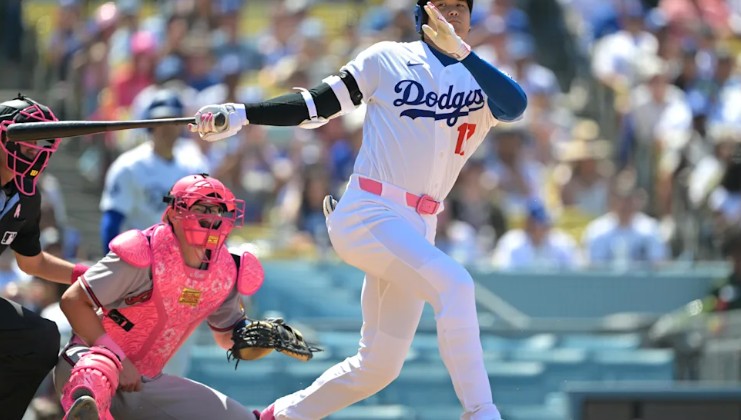
August baseball usually comes with a strange feeling.
The postseason is still weeks away, but suddenly every game feels bigger.
Every win can change a playoff seed. Every loss can create pressure. And when two division leaders meet this late in the season, the matchup can feel like a preview of October.
That is exactly what is happening with the Los Angeles Dodgers and Atlanta Braves.
The Dodgers and Braves are facing off in a crucial three-game series at Truist Park from August 25–27, with both teams entering the matchup as National League division leaders. MLB itself has described the series as one where playoff seeding is at stake.
And there is plenty to watch.
The Dodgers arrived in Atlanta riding a six-game winning streak and carrying an 80–51 record. The Braves entered at 76–55, five games behind Los Angeles in the National League standings.
But the numbers only tell part of the story.
The biggest storyline may be waiting on the mound.
Tyler Glasnow is back.
After spending more than three months on the injured list because of lower-back spasms, the Dodgers right-hander is returning to the rotation against Atlanta.
And suddenly, the Dodgers look a little more dangerous heading toward October.
Why This Series Matters So Much
At first glance, a three-game series in late August might not sound like a season-defining event.
But the calendar changes everything.
There are only a few weeks left in the regular season. Teams are no longer simply trying to build a good record. They are trying to position themselves for October.
MLB’s current playoff format makes seeding particularly important.
The top two division winners in each league receive byes into the Division Series, while the remaining division winner and three Wild Card teams must play a best-of-three Wild Card Series. The higher seed hosts all three games.
That means finishing higher in the standings isn’t just about bragging rights.
It can mean extra rest.
It can mean avoiding the Wild Card round.
It can mean home-field advantage.
And, potentially, it can mean a much easier road to the World Series.
That is why Dodgers vs. Braves suddenly feels much bigger than a normal August series.
Dodgers Enter Atlanta With Momentum
The Dodgers came into the series playing some of their best baseball of the season.
Their record stood at 80–51, good for a .611 winning percentage.
They had won six consecutive games.
Their recent 10-game record was 7–3.
And their run differential was a strong +151.
Those numbers paint a picture of a team that is not merely surviving the regular season.
The Dodgers are building momentum.
MLB’s official standings also show Los Angeles sitting behind only the Milwaukee Brewers in the National League at this point in the season.
The Dodgers’ offensive firepower has been one of their biggest advantages.
Of course, there is Shohei Ohtani.
There is Freddie Freeman.
There is Mookie Betts.
And there is an increasingly deep supporting cast.
But what makes the Dodgers especially dangerous heading into September is the possibility of having their pitching staff become healthier at exactly the right time.
That brings us to Glasnow.
Tyler Glasnow’s Return Changes the Conversation
Tyler Glasnow’s return may be one of the most important developments of the entire series.
Before his injury, Glasnow had posted a 2.72 ERA with 49 strikeouts over 39⅔ innings in seven starts during the 2026 season.
Those are impressive numbers.
But the real question isn’t whether Glasnow can pitch.
It’s whether he can stay healthy.
That has been the frustrating part of his career.
When healthy, Glasnow has the kind of stuff that can dominate major-league hitters.
His fastball can overpower hitters.
His breaking pitches can generate swings and misses.
And his size and extension make his pitches especially difficult to square up.
The Dodgers did not need another reason to scare opponents.
Now they may have one.
Glasnow vs. Bryce Elder
The pitching matchup for the series opener adds another layer of intrigue.
Glasnow is facing Atlanta right-hander Bryce Elder.
The matchup immediately gives fans something to debate.
Can Glasnow look like the pitcher he was before his injury?
Can Elder keep the Dodgers’ powerful lineup under control?
And which team will be able to exploit the other club’s weaknesses first?
Elder has had an inconsistent season, but he remains capable of delivering strong outings.
That makes the opening game particularly fascinating.
The Dodgers have more overall momentum.
The Braves have home-field advantage.
And both teams know how important a series win could be.
Atlanta Has Something to Prove
The Braves entered the series with a 76–55 record.
That is still an excellent season.
But their recent form has been less convincing.
MLB’s standings show Atlanta going 3–7 over its previous 10 games entering August 25.
That is the kind of stretch that can create questions.
Are the Braves simply experiencing a temporary slump?
Or is the team beginning to lose momentum at exactly the wrong time?
The answer could become clearer over these three games.
Atlanta is also trying to protect its position in the NL East.
The Braves have built a strong season, but Philadelphia and other National League contenders remain part of the larger playoff picture.
A poor stretch now could turn a comfortable division race into a much more stressful September.
The Braves Still Have One Major Advantage
There is one thing Los Angeles cannot ignore.
Atlanta is extremely strong at home.
The Braves entered the series with a 42–23 home record.
That is a .646 winning percentage.
In other words, Truist Park has been a difficult place for opponents to win.
And now one of baseball’s biggest teams is walking into it.
The crowd will be loud.
The stakes are high.
And the Braves know that this is an opportunity to close the gap against a team sitting above them in the standings.
If Atlanta can win the series, the entire National League playoff conversation could become more interesting.
Shohei Ohtani Adds Another Level of Drama
Of course, no Dodgers story in 2026 feels complete without Shohei Ohtani.
Ohtani has become one of the biggest attractions in baseball, and his presence automatically raises the attention level of any series.
For Atlanta fans, this is a chance to see one of the most extraordinary players of his generation.
For Dodgers fans, it is another opportunity to watch their superstar perform in a high-pressure environment.
And for the league, it is another reminder of how much attention the Dodgers can generate.
But Ohtani isn’t the only reason Atlanta has to worry.
The Dodgers have an intimidating lineup from top to bottom.
That means a pitcher cannot simply survive against one superstar.
He has to navigate an entire lineup.
Freddie Freeman Is Another Key
Freddie Freeman brings a different kind of threat.
While Ohtani can change a game with power and speed, Freeman’s greatest weapon has always been his ability to control at-bats.
He understands the strike zone.
He rarely looks rushed.
And he can punish mistakes.
That becomes particularly important in a playoff-style series.
The Dodgers don’t necessarily need to hit five home runs to win.
They can create pressure with walks, doubles, hard contact and long at-bats.
Eventually, one mistake can become a big inning.
What About Mookie Betts?
Then there is Mookie Betts.
Betts gives Los Angeles another elite offensive weapon while also adding defensive versatility and postseason experience.
That combination matters in August.
A team preparing for October needs players who can contribute in multiple ways.
One night it might be a big hit.
The next night it could be defense.
Or a baserunning decision.
Or simply a veteran at-bat that changes the momentum of an inning.
The Dodgers have plenty of players capable of doing exactly that.
Atlanta’s Ronald Acuña Jr. Can Change Everything
The Braves have their own superstar.
Ronald Acuña Jr.
When healthy and in rhythm, Acuña can completely change the way a game is played.
His combination of power, speed and athleticism creates constant pressure.
He doesn’t need three hits to impact a game.
One swing can change the score.
One stolen base can change the geometry of an inning.
One spectacular defensive play can save a run.
That is why the Dodgers cannot simply focus on Atlanta’s pitching.
The Braves have enough offensive talent to punish mistakes.
This Is More Than a Regular-Season Series
There is an important psychological element to this matchup.
Players know they could see each other again in October.
The Dodgers are perennial contenders.
The Braves are perennial contenders.
Both organizations expect to play meaningful baseball deep into the postseason.
That creates an interesting dynamic.
Neither team wants to reveal everything.
But neither team can afford to treat the series casually.
A win could strengthen confidence.
A loss could expose weaknesses.
And a dominant performance from a key player could affect how opponents approach that player later in the season.
The Dodgers’ Biggest Question: Pitching Depth
The Dodgers have one of baseball’s most talented rosters.
But talent isn’t the same as health.
Pitching depth is always one of the biggest questions for a championship contender.
A team can have five excellent starters in April.
By October, it may have only three.
That is why Glasnow’s return matters so much.
The Dodgers want as many quality arms as possible available when the postseason arrives.
The potential return of other pitchers could make the rotation even stronger.
The organization has already invested heavily in building a championship-caliber staff.
Now the challenge is keeping it healthy.
The Braves Have Their Own Problem
Atlanta’s biggest concern may be momentum.
Going 3–7 over 10 games doesn’t erase an excellent season.
But it does create urgency.
The Braves need to avoid turning a temporary slump into a prolonged collapse.
And facing the Dodgers is not exactly the easiest way to get comfortable again.
If Atlanta can beat Los Angeles, confidence could return quickly.
If the Dodgers sweep or take two of three, however, the Braves could enter September with more questions than answers.
Why the First Game Could Be Huge
The opener features the return of Glasnow.
That alone makes it important.
But opening a three-game series also has strategic value.
The winner immediately gains an advantage.
The loser has to respond.
If Atlanta wins behind Elder, the Braves can suddenly feel that they have seized control of the matchup.
If Los Angeles wins with Glasnow returning successfully, the Dodgers could send a very different message:
Their rotation is getting healthy at exactly the right time.
That is the storyline everyone will be watching.
The Battle for NL Seeding
The larger National League picture makes the series even more fascinating.
Milwaukee currently sits at the top of the NL standings with an 81–50 record.
Los Angeles follows at 80–51.
Atlanta is at 76–55.
The Dodgers therefore have a chance to keep pressure on Milwaukee while also widening the gap over Atlanta.
The Braves, meanwhile, have a chance to cut into that five-game difference.
That creates a fascinating three-team dynamic.
The Dodgers are chasing the best possible seed.
The Braves are trying to move upward.
And Milwaukee is trying to hold everyone off.
Every August game matters more when the standings are this tight.
What Happens If the Dodgers Win the Series?
A series victory would reinforce the idea that Los Angeles is one of the National League’s teams to beat.
It would also extend their momentum heading into September.
More importantly, it could provide confidence that Glasnow’s return is real and sustainable.
For a team with championship expectations, that is valuable.
The Dodgers don’t need to prove they can make the playoffs.
They need to prove they can enter October in the best possible condition.
What Happens If the Braves Win?
For Atlanta, taking two or three games would be enormous.
It would stop the recent slide.
It would cut into the Dodgers’ lead.
And it would remind the National League that the Braves remain a serious contender.
A strong performance against Los Angeles could also change the team’s confidence level.
Baseball can be streaky.
A three-game series can sometimes become the starting point for an entirely different month.
That is what Atlanta is hoping for.
The Real Winner Could Be Baseball Fans
There is another reason this series is so appealing.
Fans don’t need to care about the standings to understand the attraction.
Two famous franchises.
Two division leaders.
Superstars everywhere.
A returning ace.
A dangerous lineup.
A packed stadium.
And the possibility that these teams could meet again when the stakes are even higher.
That is the kind of baseball that attracts casual viewers.
It is also exactly the type of matchup that can become a social-media event.
One home run can dominate the internet.
One spectacular catch can become a highlight shared millions of times.
And one pitching performance can completely change the postseason narrative.
The Questions Everyone Is Watching
As the Dodgers and Braves continue their series, several questions stand out.
Can Tyler Glasnow stay healthy?
Will Bryce Elder contain Los Angeles’ powerful lineup?
Can Atlanta’s offense break out of its recent slump?
Will Shohei Ohtani deliver another huge performance?
Can Ronald Acuña Jr. change the game for Atlanta?
Which team will gain momentum heading into September?
And perhaps the biggest question:
Could this be a preview of an October playoff matchup?
Nobody knows yet.
But that uncertainty is exactly what makes baseball so compelling.
Why August Suddenly Feels Like October
The calendar still says August.
But for the Dodgers and Braves, the feeling is different.
There is no need to panic.
There are still games remaining.
But every game is now part of a larger calculation.
Who gets the bye?
Who hosts?
Who travels?
Who faces the Wild Card round?
Who gets the healthier pitching staff?
Who enters October with momentum?
Those questions are beginning to matter.
And Dodgers vs. Braves is one of the most interesting answers to all of them.
The Bottom Line
The Dodgers entered Atlanta with the better record, a six-game winning streak and a five-game advantage over the Braves.
Atlanta entered with one of baseball’s strongest home records but also a recent 3–7 stretch.
That makes the series incredibly difficult to predict.
Los Angeles has momentum.
Atlanta has home-field advantage.
The Dodgers have a star-studded lineup.
The Braves have their own collection of elite talent.
And Tyler Glasnow’s return could become the biggest story of all.
The 2026 MLB postseason is still weeks away.
But the race for October positioning has already begun.
And when the Dodgers and Braves meet in a high-stakes August series, every pitch can feel like a small preview of what is coming.
For baseball fans, that is the fun.
Because the biggest games of October are built from moments that happen in August.
And right now, one of those moments is happening in Atlanta.
Dodgers vs. Braves isn’t just another series.
It is a test.
A warning.
A momentum battle.
And potentially, a glimpse at the October baseball that is coming next.
*Stats and standings referenced above reflect the 2026 regular season information available around August 25, 2026. *