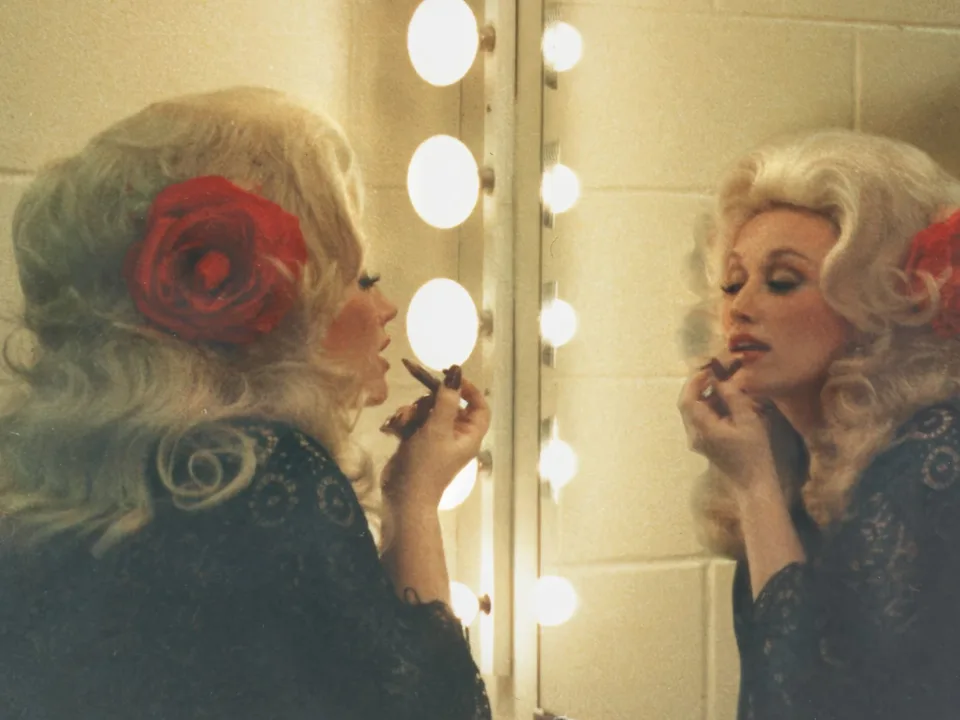
Dolly Parton, the rhinestone-covered, big-hearted superstar who transformed country music while becoming one of America’s most beloved cultural figures, has died at the age of 80.
Her death was announced Tuesday, August 25, 2026, through a video posted to her official social media account by her nephew Bryan Seaver, who had worked as her head of security for more than two decades. Parton’s representatives later confirmed that she died peacefully in Nashville, Tennessee.
The news immediately sent shockwaves through the music world.
But the reaction went far beyond Nashville.
Fans remembered the woman behind some of the most recognizable songs in American music. Hollywood stars shared tributes. Country musicians mourned an extraordinary songwriter and performer. And President Donald Trump announced an unusually broad national tribute: American flags were ordered to fly at half-staff for one week in honor of Parton.
The White House proclamation directs flags to remain at half-staff at the White House, public buildings, military facilities, naval vessels and U.S. diplomatic facilities worldwide until sunset on September 1, 2026.
For a woman who began life in a tiny Tennessee mountain cabin, the scale of the farewell is extraordinary.
And perhaps that is exactly what makes Dolly Parton’s story so remarkable.
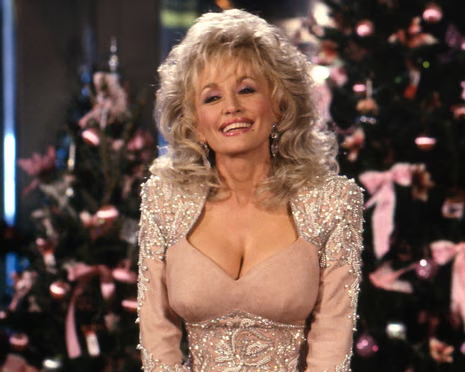
Dolly Parton Dies at 80 in Nashville
Parton died on August 25 at age 80.
Her family announced the death in a prerecorded video, with Bryan Seaver speaking on behalf of the Parton and Owens families. The announcement described her as a sister, aunt and grandmother figure to generations of relatives and fans.
Her representatives said she died peacefully surrounded by loved ones.
The exact medical circumstances surrounding her death initially remained unclear. In the days before her death, however, Parton had publicly acknowledged that she had been dealing with health problems.
On August 21, she told fans that she was taking time to focus on health issues she had previously neglected while caring for her husband, Carl Dean, who died in March 2025 after nearly six decades of marriage.
Some reports later cited representatives describing a brief battle with cancer, although details about the type of cancer were not disclosed.
That uncertainty made the news feel even more sudden for millions of people.
Parton had spent decades projecting an image of energy, humor and optimism. Even when discussing difficult subjects, she was famous for finding a way to make people smile.
Her passing therefore represents not simply the death of a singer, but the end of an era.
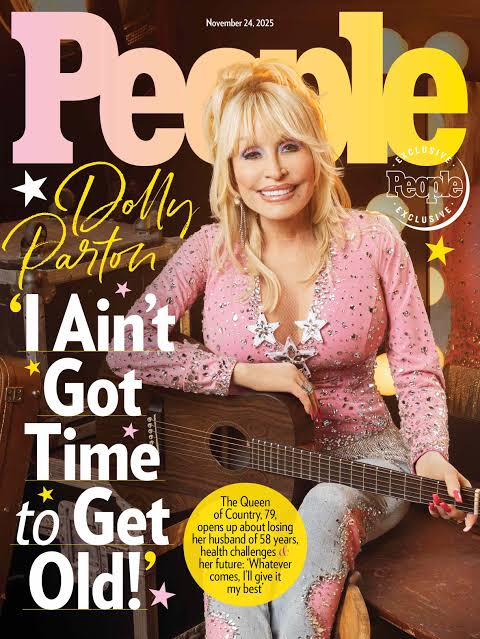
From a Tennessee Mountain Cabin to Global Stardom
Dolly Rebecca Parton was born into poverty in rural Tennessee.
She grew up in a large family, sharing a modest home with her parents and siblings. Her early life was dramatically different from the glamorous world she would eventually enter.
There were no private jets.
No red carpets.
No giant entertainment empire.
Instead, there was music.
Parton grew up surrounded by traditional Appalachian and gospel music, and those sounds became the foundation of her songwriting.
Her childhood experiences would later become some of the most powerful material in her catalog.
Songs such as “Coat of Many Colors” drew directly from memories of poverty, family and pride. Rather than hiding where she came from, Parton turned those experiences into stories that millions of people could recognize.
That ability to make intensely personal experiences feel universal became one of her greatest strengths.
She eventually moved to Nashville and began building a professional career.
Her breakthrough came through songwriting and performing, eventually leading to her highly visible partnership with country star Porter Wagoner.
The rest became music history.
The Songs That Made Dolly Parton Immortal
Ask someone to name a Dolly Parton song and there is a good chance the answer will come quickly.
“Jolene.”
“I Will Always Love You.”
“9 to 5.”
“Coat of Many Colors.”
“Here You Come Again.”
“Islands in the Stream.”
The list goes on.
Parton was not simply a singer who performed songs written by other people.
She was one of the most prolific songwriters in popular music.
She could write about heartbreak, poverty, ambition, family, jealousy, work, faith and love without losing the emotional simplicity that made her songs immediately accessible.
Her writing was often deceptively straightforward.
“Jolene,” for example, is built around an intensely personal plea from one woman to another. Yet its emotional tension is so universal that generations of listeners have continued discovering it.
Then there was “I Will Always Love You.”
Parton originally wrote and recorded the song herself. Years later, Whitney Houston transformed it into a global pop phenomenon after recording it for the soundtrack of The Bodyguard.
Houston’s version became one of the most famous recordings in modern music history.
But the song always remained connected to Parton.
That is part of her extraordinary legacy: she could create songs that became bigger than their original genre while still retaining the emotional fingerprints of their writer.
More Than 100 Million Records Sold
By the end of her career, Parton had become one of the best-selling recording artists of all time.
Her music sales surpassed 100 million worldwide, while her songs accumulated enormous streaming numbers in the digital era.
Her achievements were equally impressive.
Parton received numerous Grammy Awards and nominations and became a member of multiple major music halls of fame.
She was inducted into the Country Music Hall of Fame.
She was also inducted into the Rock & Roll Hall of Fame.
And her influence extended well beyond country music.
That may be one of the most important things about Dolly Parton.
She was never only a country singer.
She became a bridge between generations, genres and even political cultures.
Country fans loved her.
Pop audiences knew her.
Hollywood embraced her.
Children grew up with her books.
Families visited her theme park.
And people who had never bought a country album could still recognize her voice within seconds.
Hollywood Discovered Another Side of Dolly
Music was only one part of Parton’s career.
She became a successful actress and appeared in several major films, demonstrating that her charisma worked just as well on screen as it did on stage.
Her role in 9 to 5 became especially iconic.
The movie connected with audiences because it mixed comedy with frustrations surrounding workplace inequality, ambition and relationships.
Parton also appeared in Steel Magnolias, proving that her acting abilities went beyond the comedic persona audiences associated with her music career.
Her Hollywood success helped turn her into something larger than a recording artist.
She became a recognizable American character.
The blonde hair.
The glittering clothes.
The Southern accent.
The sharp sense of humor.
The self-deprecating jokes.
And beneath all of it, an extraordinarily disciplined businesswoman.
The Dolly Parton Image Was More Complicated Than It Looked
For decades, Parton joked about her appearance.
She famously embraced exaggerated femininity, elaborate hairstyles, rhinestones and glamorous outfits.
But there was strategy behind the image.
Parton understood celebrity.
She knew that people remembered distinctive personalities.
She also knew how to control her own narrative.
Instead of allowing critics to define her appearance, she turned it into part of her brand.
The result was an image that became instantly recognizable around the world.
Yet behind the jokes and costumes was an artist who understood songwriting, publishing, business and audience psychology at an unusually high level.
She was also remarkably careful about maintaining her independence.
That combination helped Parton remain relevant for decades while many performers from her generation disappeared from mainstream attention.
Dolly Parton and the Birth of Dollywood
Parton’s influence was not limited to records and movies.
She also became a major force in Tennessee tourism through Dollywood.
The theme park in Pigeon Forge, Tennessee, eventually became one of the state’s most recognizable tourist attractions.
But Dollywood was about more than rides.
It reflected Parton’s connection to her Appalachian roots.
Visitors could experience music, food, crafts and entertainment while encountering elements inspired by the culture in which she was raised.
The business also created jobs and helped drive tourism in the region.
In many ways, Dollywood represented Parton’s philosophy perfectly.
She took something personal — her childhood, her home region and her memories — and turned it into something that could be shared with millions.
The Dolly Parton Imagination Library May Be Her Greatest Legacy
For all her music awards and entertainment achievements, Parton’s most lasting impact may ultimately come from something completely different.
Books.
Parton founded the Imagination Library, a literacy initiative designed to provide children with free books.
The program grew from a local effort into an international initiative.
Millions of children have received books through the program, helping introduce young readers to the joy of reading regardless of their family’s financial circumstances.
That work became deeply associated with Parton’s identity.
She understood firsthand what it meant to grow up without much money.
Instead of simply talking about childhood poverty, she created a practical way to give children opportunities she wished more families could have.
This is one reason her death has resonated far beyond the music industry.
Dolly Parton was not merely famous.
She built institutions.
She funded causes.
She created opportunities.
And she used her celebrity to reach people who might never have listened to a country song.
A Woman Who Avoided Political Labels
Another unusual aspect of Parton’s popularity was her ability to remain broadly admired across political divisions.
At a time when many celebrities became strongly identified with particular political movements, Parton generally avoided partisan battles.
She was outspoken about compassion, education and helping people, but she rarely presented herself as a political celebrity.
That made her unusual.
It also explains why tributes following her death came from across the political spectrum.
President Trump was among those who publicly mourned her.
In his Truth Social post, Trump called Parton one of the greatest country singers ever and said her death was a tremendous loss.
He then announced that American flags would be lowered throughout the country beginning at 6 p.m. on August 25 for one week.
The official White House proclamation later specified that the half-staff period would continue through sunset September 1.
Why Did Trump Order Flags to Half-Staff?
The decision quickly became one of the biggest parts of the story.
A presidential order to lower American flags nationwide is a highly visible national tribute.
In this case, the order covers federal buildings, military installations and diplomatic facilities.
It is a powerful symbol because the flag becomes part of the mourning process.
Across the United States, people will see the American flag flying lower than usual while the country remembers Parton.
The symbolism is especially striking given how closely Parton was associated with American culture.
She was born in Tennessee, built her career in Nashville and transformed her Appalachian roots into an international brand.
The White House proclamation described the measure as a mark of respect for her memory.
Her Death Comes After the Loss of Her Husband
Parton’s final years were also marked by profound personal loss.
Her husband, Carl Dean, died in March 2025.
The couple had been married for nearly 60 years, an unusually long marriage by Hollywood standards.
Dean largely stayed away from the spotlight.
That was part of what made their relationship so fascinating.
While Parton became one of the most recognizable women in the world, Dean maintained a much more private life.
After his death, Parton acknowledged that she was grieving deeply.
She also suggested that caring for him had caused her to neglect her own health.
By 2026, she had begun speaking more openly about her need to slow down and focus on her physical recovery.
That makes the timing of her death especially poignant.
After spending decades caring for audiences, family and others, Parton had finally been forced to confront her own vulnerability.
Dolly Parton’s Final Chapter
In the months before her death, Parton had begun reducing some of her public commitments.
Health concerns affected her plans, including previously announced entertainment projects.
Yet she continued looking for new ways to connect with audiences.
Even late in life, she was still thinking about the future of entertainment.
That was classic Dolly Parton.
She was never particularly interested in simply repeating the past.
She constantly reinvented herself.
Country music star.
Pop songwriter.
Actress.
Businesswoman.
Theme-park creator.
Author.
Philanthropist.
Producer.
Cultural icon.
The list kept growing.
Why Dolly Parton Meant So Much to So Many People
It is difficult to explain Parton’s appeal with a single sentence.
Her music was one part of it.
Her humor was another.
Her appearance was unforgettable.
Her personality was warm.
Her business instincts were extraordinary.
But perhaps the biggest factor was authenticity.
Parton never pretended she came from somewhere else.
She openly talked about growing up poor.
She talked about family.
She talked about faith.
She talked about heartbreak.
She talked about aging.
And she laughed at herself.
That combination made her feel approachable even as her fame became enormous.
Many celebrities become more distant as they become more successful.
Parton somehow did the opposite.
The bigger she became, the more she emphasized the values that shaped her childhood.
Family.
Hard work.
Kindness.
Humor.
Generosity.
Those themes became central to her brand.
The Woman Behind “Jolene”
“Jolene” may be one of the clearest examples of Parton’s songwriting genius.
The song takes a simple premise — a woman begging another woman not to take her partner — and turns it into a story of vulnerability.
There is no complicated production trick required.
The power comes from the emotional tension.
The narrator is afraid.
She knows she may lose.
And rather than pretending to be invincible, she admits her fear.
That honesty is part of why “Jolene” has survived for generations.
Artists across genres have covered it.
Young listeners continue discovering it.
And its central emotional conflict remains instantly understandable.
That is what great songwriting does.
It survives the era in which it was created.
“I Will Always Love You” Became Bigger Than Country Music
Then there is the song that may ultimately define Parton’s songwriting legacy for the mainstream audience.
“I Will Always Love You.”
Parton originally wrote the song about saying goodbye.
Whitney Houston later recorded a dramatically different version for The Bodyguard.
Houston’s extraordinary vocal performance transformed the song into a worldwide phenomenon.
Yet the story has an important second layer.
Parton had already written the emotional blueprint.
She had created the words.
The melody.
The feeling.
The story.
Houston gave it another life, but the songwriting foundation belonged to Parton.
That distinction matters.
Parton was not merely a performer whose songs became famous.
She was the architect behind songs that other legendary performers could transform into cultural landmarks.
A Legacy That Will Continue Through New Generations
The easiest way to measure a celebrity’s legacy is through awards.
But Parton’s real legacy is harder to count.
It exists in children who received their first books through the Imagination Library.
It exists in musicians who learned songwriting from her catalog.
It exists in families who visited Dollywood.
It exists in movie fans who grew up watching 9 to 5.
It exists in singers who continue performing “Jolene.”
It exists in people who first heard “I Will Always Love You” through Whitney Houston and later discovered that Dolly Parton wrote it.
And it exists in countless people who never considered themselves country music fans but somehow loved Dolly anyway.
That may be the ultimate measure of her success.
She crossed boundaries that were supposed to be permanent.
Country and pop.
Music and film.
Celebrity and philanthropy.
Business and entertainment.
Old generations and new ones.
She connected all of them.
Dolly Parton’s Death Marks the End of an American Era
Dolly Parton’s death at 80 is more than another celebrity obituary.
It marks the passing of one of the rare entertainers whose career became intertwined with the identity of an entire region and, eventually, an entire country.
She came from rural Tennessee and carried those roots with her everywhere.
She built a career that lasted more than six decades.
She sold more than 100 million records.
She wrote songs that became standards.
She starred in Hollywood films.
She built Dollywood.
She gave millions of children access to books.
And she remained recognizable to people who were born decades after her first records were released.
That kind of longevity is extraordinarily rare.
What Happens Next?
In the immediate aftermath of her death, fans will inevitably return to the music.
Streaming platforms are likely to see renewed interest in her biggest songs.
Younger audiences will discover her catalog for the first time.
Artists will perform tributes.
Hollywood will revisit her films.
Dollywood will become a place of pilgrimage for fans who want to feel closer to her story.
And the discussion surrounding her philanthropy will likely become even larger.
But perhaps the most fitting tribute is also the simplest one.
Listen to the songs.
Read the stories.
Remember the jokes.
Watch the films.
Support literacy.
And pass her music to another generation.
Because Dolly Parton spent her life creating things designed to outlive her.
The Queen of Country Leaves the Stage
Dolly Parton once built a career around turning difficult experiences into beautiful stories.
She knew poverty.
She knew heartbreak.
She knew rejection.
She knew loss.
But she also knew how to turn those experiences into music, laughter and opportunity.
Now, at 80, the Queen of Country Music has taken her final bow.
The rhinestones may eventually become part of history.
The wigs may become museum pieces.
The old photographs will fade.
But the songs will remain.
“Jolene” will still be sung.
“I Will Always Love You” will still break hearts.
“9 to 5” will still make audiences laugh and nod in recognition.
And somewhere, a child will open a book that arrived because Dolly Parton believed every child deserved that chance.
That may be the most powerful part of her story.
She didn’t simply spend a lifetime asking the world to listen to her.
She spent a lifetime finding ways to give something back.
On August 25, 2026, Dolly Parton died peacefully in Nashville at the age of 80.
America lowered its flags.
The music world fell silent.
And generations of fans said goodbye to a woman who had somehow made the world feel a little brighter.
There may never be another Dolly Parton.
And as President Trump said in his tribute, there has never been anyone quite like her.