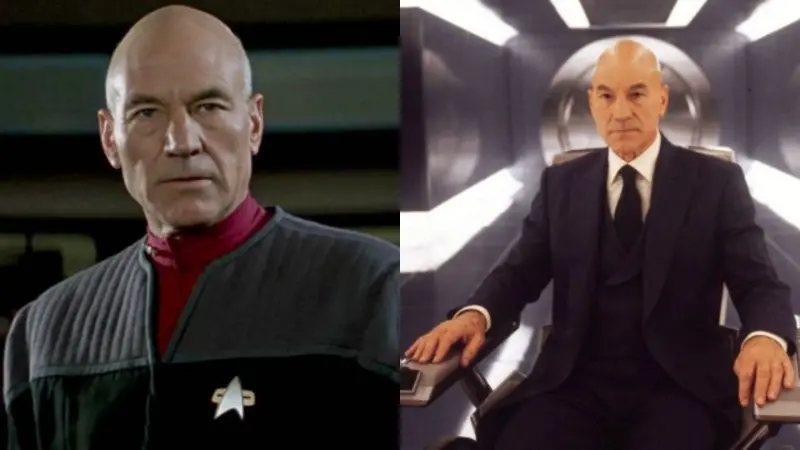
Sir Patrick Stewart, the legendary British actor who brought Professor X in X-Men and Captain Jean-Luc Picard in Star Trek to life, has died at the age of 86.
Stewart died at his home in Los Angeles on October 28, 2026, following what his representative described as a brief and poignant journey with Alzheimer’s disease and Lewy body dementia. His family confirmed the news on October 29.
For millions of fans, Stewart was much more than a familiar face on screen. He was the wise, soft-spoken leader of the X-Men, the thoughtful captain of the USS Enterprise, and a gifted stage actor whose career spanned more than six decades.
His performances connected generations of viewers, bringing intelligence, warmth, and humanity to some of science fiction’s most beloved characters.
From Shakespearean theater to Hollywood blockbusters, Stewart leaves behind an extraordinary legacy. Here’s a look at his remarkable life, his most iconic roles, the illness he faced, and the final film appearance that will bring him back to the big screen.
What Happened to Patrick Stewart? The Actor Dies at 86
Stewart passed away at his home in Los Angeles on Wednesday, October 28, according to a statement shared by his representative and family.
The statement said he had experienced a brief period of illness involving Alzheimer’s disease and Lewy body dementia. His wife, singer Sunny Ozell, was by his side.
The family also shared an emotional tribute describing how he spent his final moments surrounded by loved ones, music, prayer, tears, and laughter.
Rather than asking fans to send flowers, the family encouraged people wishing to honor Stewart’s memory to consider supporting Alzheimer’s research and caregiver resources.
The news prompted an outpouring of tributes from fellow actors, filmmakers, and fans around the world.
Marvel Studios praised Stewart for bringing Professor Charles Xavier to life with extraordinary grace, intelligence, and humanity. Hugh Jackman, his longtime X-Men co-star, remembered him as a tremendous friend and a remarkable man.
For fans who grew up watching him command the Enterprise or guide young mutants at his school, the news marked the end of an era.
Patrick Stewart’s Health: What Were Alzheimer’s Disease and Lewy Body Dementia?
According to the family’s announcement, Stewart experienced a brief illness involving Alzheimer’s disease and Lewy body dementia.
Although both conditions affect the brain, they are different neurological disorders.
Alzheimer’s disease is the most common cause of dementia. It gradually affects memory, thinking, language, and the ability to carry out everyday activities. Symptoms and the speed of progression vary from person to person.
Lewy body dementia can affect attention, thinking, movement, and sleep. Some people experience visual hallucinations or noticeable changes in alertness and concentration.
Both conditions can be challenging for patients and their families, but their symptoms and progression are not identical.
The family has not publicly provided a detailed medical history, including the exact timing of Stewart’s diagnoses or the specific symptoms he experienced.
His passing also brings attention to the difficult realities faced by people living with dementia and those who care for them.
Stewart spent much of his public life portraying intelligent, capable leaders who helped others navigate uncertainty. His final illness was a deeply personal chapter, separate from the powerful fictional characters audiences knew so well.
From a Working-Class Childhood to the World Stage
Patrick Stewart was born on July 13, 1940, in Mirfield, Yorkshire, England.
His early life was far removed from the glamorous world of Hollywood. He grew up in a working-class family and discovered his passion for acting as a young boy.
A teacher encouraged him to explore Shakespeare, helping introduce him to a world that would eventually shape his entire career.
Stewart left school as a teenager and pursued acting, developing his skills through theater rather than following the conventional path to movie stardom.
In the 1960s, he joined the Royal Shakespeare Company, one of Britain’s most respected theater institutions.
There, he built a reputation as a serious performer with an exceptional command of language. He appeared in classical productions and developed the precise diction, rich voice, and emotional control that would later become his trademarks.
His theatrical background was crucial to his success.
When Stewart delivered a line as Captain Picard or Professor X, his authority came not from shouting or physical intimidation but from the way he spoke. A pause, a change in tone, or a carefully chosen word could make an ordinary conversation feel like a defining moment.
He continued to work in theater throughout his career, earning recognition for his performances on both sides of the Atlantic.
In 2010, Stewart was knighted by Queen Elizabeth II for his services to drama.
Yet his journey to international fame came relatively late compared with many Hollywood stars.
It was television science fiction that would introduce him to an entirely new generation of fans.
Professor X: The Heart and Soul of the X-Men
For many moviegoers, Stewart will forever be associated with Professor Charles Xavier, the brilliant mutant who founded the X-Men.
He first portrayed the character in the 2000 film X-Men, helping bring Marvel’s mutant superheroes into a new era of big-screen storytelling.
Professor X is one of the world’s most powerful telepaths, capable of connecting with and influencing other minds. But his greatest strength isn’t simply his extraordinary ability.
It’s his belief that people who are different can still live together in peace.
In the X-Men universe, mutants are often feared, rejected, and discriminated against because of their abilities. Professor X believes that understanding and cooperation offer a better future than hatred and violence.
His philosophy puts him in direct conflict with his longtime friend and ideological rival, Magneto, played by Ian McKellen.
Magneto has also experienced persecution, but he believes mutants must use their power to defend themselves against humanity. Professor X, meanwhile, continues to search for a path toward coexistence.
Their conflict gives the X-Men films much of their emotional depth.
Neither character is simply a symbol of good or evil. They represent two different responses to fear, prejudice, and the struggle for survival.
Stewart made Professor X feel like a real person rather than a typical superhero.
His performance combined authority with compassion. He could be reassuring and patient one moment, then fiercely determined when the safety of his students was at stake.
For generations of viewers, Professor X became a symbol of leadership, empathy, and the courage to stand by one’s principles.
Why Logan Revealed a Different Side of Professor X
Stewart delivered one of his most emotionally powerful performances in the 2017 film Logan.
Unlike the confident mentor audiences had come to know, the Professor X in Logan is elderly, vulnerable, and struggling with the consequences of a painful past.
He is no longer an untouchable figure who always knows what to do. He makes mistakes, experiences fear, and depends on others.
That vulnerability makes the character more human.
The film also explores the complicated relationship between Professor X and Hugh Jackman’s Wolverine. Their bond combines affection, frustration, loyalty, and the emotional weight of years spent fighting together.
Stewart’s performance brought a quiet sadness to the story, showing that even the wisest and most powerful people can become fragile with age.
For many fans, Logan remains one of the most memorable superhero films precisely because it treats its heroes as people rather than invincible legends.
Captain Picard: The Starship Commander Who Changed Science Fiction
If Professor X represents compassion and the fight against prejudice, Captain Jean-Luc Picard represents another of Stewart’s defining qualities: thoughtful leadership.
Stewart first appeared as Picard in Star Trek: The Next Generation, which premiered in 1987.
As captain of the USS Enterprise-D, Picard led a crew exploring distant worlds, encountering unfamiliar civilizations, and facing threats that often tested the limits of science, diplomacy, and morality.
He quickly became one of the most recognizable figures in the Star Trek universe.
Picard was different from the action heroes who dominated many television shows. He preferred diplomacy to violence, reason to impulsiveness, and careful judgment to quick assumptions.
He was willing to listen to his crew, consider opposing viewpoints, and admit when a situation demanded more thought.
Of course, he was not always right. His decisions sometimes carried painful consequences, and he frequently faced situations in which every available choice involved a difficult compromise.
That complexity made him compelling.
Stewart’s Shakespearean training gave Picard a commanding presence without making him seem cold or distant. His measured delivery could communicate authority, frustration, humor, and compassion, often within the same scene.
Under his leadership, the Enterprise became more than a spaceship. It became a setting for stories about humanity’s hopes, flaws, and potential.
Why Captain Picard Still Matters
One reason Picard remains so popular is that his strength rarely depends on physical force.
He treats knowledge as a responsibility and leadership as a service rather than a privilege.
When encountering an unfamiliar civilization, he often tries to understand its values before judging its actions. When facing a crisis, he seeks solutions that protect lives without abandoning his principles.
These qualities helped make Star Trek: The Next Generation more than a space adventure.
The series explored questions about artificial intelligence, identity, prejudice, war, diplomacy, and what it means to be human.
Stewart returned to the role in several Star Trek films and later reprised Picard in the television series Star Trek: Picard, which premiered in 2020.
His return allowed longtime fans to reconnect with a character who had grown older but remained committed to the values that defined him.
Although Professor X and Captain Picard belong to different fictional universes, they share a remarkable similarity: both believe that real leadership requires empathy, patience, and the willingness to make difficult decisions.
Stewart made those qualities feel natural rather than idealistic.
Patrick Stewart’s Final Movie: A Return as Professor X in Avengers: Doomsday
Stewart’s legacy will continue on screen after his death.
He filmed an appearance as Professor X in Marvel’s upcoming movie Avengers: Doomsday, which is scheduled for release on December 18, 2026.
The film is expected to bring together characters from different corners of the Marvel universe, including familiar faces associated with the X-Men franchise.
For longtime fans, Stewart’s return as Charles Xavier carries special significance.
He first played Professor X in 2000. More than a quarter-century later, the character remains one of his most recognizable roles.
His appearance in Avengers: Doomsday is expected to be among his final film performances released to audiences.
However, a movie’s release date does not establish when an actor completed filming, and the full extent of Stewart’s role has not been detailed here. The film’s final content and his character’s place in the story will become clearer through official releases.
Even so, the prospect of seeing Stewart return as Professor X offers fans another opportunity to experience the character he helped define.
For viewers who followed the original X-Men films, it will be a particularly emotional reunion.
Hugh Jackman and Ian McKellen Pay Tribute to Their Friend
Following the announcement of Stewart’s death, tributes poured in from across the entertainment industry.
Among the most moving responses came from Hugh Jackman and Ian McKellen, two actors whose careers became closely connected with Stewart through the X-Men films.
Jackman played Wolverine, the fierce and often reluctant hero who developed a complicated but deeply meaningful relationship with Professor X.
On screen, their characters frequently disagreed. Wolverine was impulsive and guarded, while Xavier believed in patience and cooperation.
Yet their differences made their bond more powerful.
Off screen, Jackman and Stewart developed a lasting friendship. Jackman remembered Stewart as a great friend and man, expressing how much he had learned from his longtime co-star.
McKellen, who portrayed Magneto, also shared a special connection with Stewart.
Their characters were ideological opponents, but the relationship between Xavier and Magneto was built on mutual respect, shared history, and an enduring affection that neither could completely abandon.
The performances worked because both actors understood that the characters’ disagreements came from deeply held beliefs rather than simple personal hatred.
Marvel Studios also paid tribute to Stewart, praising the grace, intelligence, and humanity he brought to Professor X.
Other members of the Star Trek community remembered him as a gifted performer whose portrayal of Picard inspired generations of viewers.
These tributes highlighted something that fans had long recognized: Stewart’s influence extended beyond the characters he played. He was admired as a colleague, mentor, and respected figure in the acting community.
Patrick Stewart’s Most Memorable Movies and TV Shows
Want to revisit Stewart’s work? These productions offer a starting point for exploring his remarkable career.
| Title | Year | Role | Why It Matters |
|---|---|---|---|
| Star Trek: The Next Generation | 1987–1994 | Captain Jean-Luc Picard | Introduced Stewart as one of science fiction’s most iconic leaders. |
| X-Men | 2000 | Professor Charles Xavier | Established his signature role in the superhero genre. |
| X2: X-Men United | 2003 | Professor X | Expanded the conflict between mutants and humanity. |
| X-Men: The Last Stand | 2006 | Professor X | Continued the saga of Xavier and Magneto’s competing philosophies. |
| X-Men: Days of Future Past | 2014 | Professor X | Connected different generations of X-Men characters. |
| Logan | 2017 | Professor X | Revealed a more vulnerable and emotionally complex Xavier. |
| Star Trek: Picard | 2020–2023 | Jean-Luc Picard | Brought the legendary captain back for a new chapter. |
| Doctor Strange in the Multiverse of Madness | 2022 | Professor X | Returned the character in Marvel’s multiverse storyline. |
| Avengers: Doomsday | Scheduled for 2026 | Professor X | Features Stewart in a posthumous screen appearance. |
These titles represent only part of his body of work.
Stewart also appeared in numerous stage productions, films, television dramas, comedies, and voice-acting projects. His career was never limited to science fiction, even though those roles ultimately made him a household name.
For theater enthusiasts, he was a respected Shakespearean actor. For television audiences, he was Captain Picard. For superhero fans, he was Professor X.
All three identities were part of the same extraordinary performer.
More Than a Science Fiction Legend
It would be easy to remember Stewart solely for his two most famous characters, but his career reflected a much broader range of interests and accomplishments.
His theater work demonstrated a lifelong commitment to the craft of acting. His public life also included support for human rights, refugees, survivors of domestic violence, veterans’ mental health services, and animal welfare.
These causes reflected values that often appeared in his performances: compassion, dignity, and concern for people facing difficult circumstances.
His roles frequently placed him in positions of authority, but he rarely portrayed leadership as an excuse to dominate others.
Instead, he showed how authority could be exercised with humility and responsibility.
That approach helped make both Professor X and Captain Picard enduring figures in popular culture.
They were powerful, but their most important decisions often involved restraint. They could fight when necessary, but they understood that violence was not always the answer.
And when faced with people who were different from themselves, they tried to understand before condemning.
Those themes remain relevant long after the final episode or movie ends.
Frequently Asked Questions About Patrick Stewart
How old was Patrick Stewart when he died?
Patrick Stewart was 86. He was born on July 13, 1940, and died at his home in Los Angeles on October 28, 2026.
What was Patrick Stewart’s cause of death?
According to his family’s announcement, Stewart died following a brief illness involving Alzheimer’s disease and Lewy body dementia. The family has not released a detailed account of his medical history.
What were Patrick Stewart’s most famous roles?
His two most iconic roles were Professor Charles Xavier in the X-Men films and Captain Jean-Luc Picard in Star Trek: The Next Generation and Star Trek: Picard.
Will Patrick Stewart appear in Avengers: Doomsday?
Yes. Stewart filmed an appearance as Professor X in Avengers: Doomsday, which is scheduled to arrive in theaters on December 18, 2026. The film is expected to be among his final screen appearances.
Did Patrick Stewart work primarily in science fiction?
No. Although science fiction brought him international fame, Stewart spent decades performing Shakespeare and other theatrical works. He also appeared in dramas, comedies, films, television shows, and animated productions.
Why was Patrick Stewart knighted?
Stewart was knighted in 2010 for his services to drama, recognizing his contributions to theater and screen acting.
Remembering Patrick Stewart: A Legacy That Will Live On
Patrick Stewart’s career was built on much more than memorable costumes, futuristic settings, or extraordinary fictional abilities.
He brought intellectual depth to Captain Picard, humanity to Professor X, and remarkable discipline to every stage and screen performance.
His characters faced unfamiliar worlds, difficult moral choices, and conflicts that could not always be solved through strength alone.
They reminded audiences that courage can mean listening, that leadership requires responsibility, and that understanding someone different from yourself is often the first step toward peace.
Stewart’s own journey—from a working-class childhood in Yorkshire to the world’s most celebrated stages and screens—was equally remarkable.
He spent decades perfecting his craft before becoming an international star, proving that a great acting career does not have to follow a conventional path.
Now, as fans revisit X-Men, Logan, and Star Trek: The Next Generation, his performances offer a way to remember the person behind the characters.
Captain Picard will continue exploring the final frontier. Professor X will continue inspiring generations of mutants and moviegoers.
And Patrick Stewart’s voice, intelligence, and unmistakable presence will remain part of the stories that brought those characters to life.
The man may be gone, but the worlds he helped create—and the humanity he brought to them—will endure.