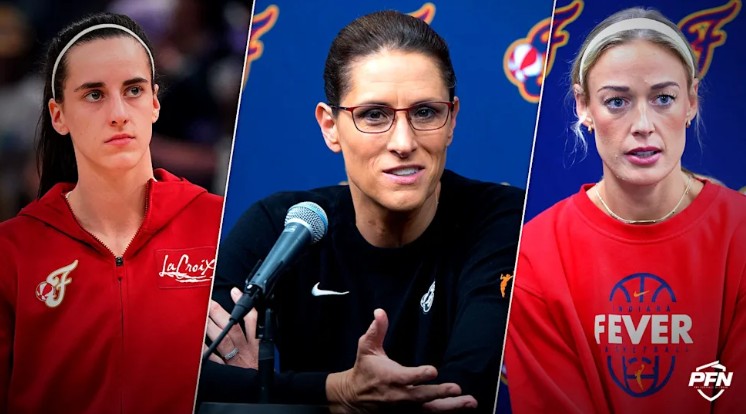
Sophie Cunningham just turned 30.
Normally, that would mean birthday posts, teammates sending congratulations, and fans sharing old highlights.
Instead, her birthday became another chapter in one of the WNBA’s biggest controversies.
The Indiana Fever guard has spent the past few weeks at the center of arguments over transgender athletes, race, free speech, social-media moderation, and the direction of women’s basketball.
And somehow, it all keeps coming back to the same name:
Sophie Cunningham.
On Aug. 16, 2026, Cunningham celebrated her 30th birthday. The WNBA and Indiana Fever both posted birthday messages, while fans flooded social media with everything from congratulations to criticism.
At the same time, reports that her name had been filtered on a major WNBA Reddit community sparked yet another argument.
Was it censorship?
Or was it simply an attempt to stop trolling and off-topic political fights?
That depends on who you ask.
And that’s exactly why the Sophie Cunningham controversy has become so much bigger than basketball.
So, Who Is Sophie Cunningham?
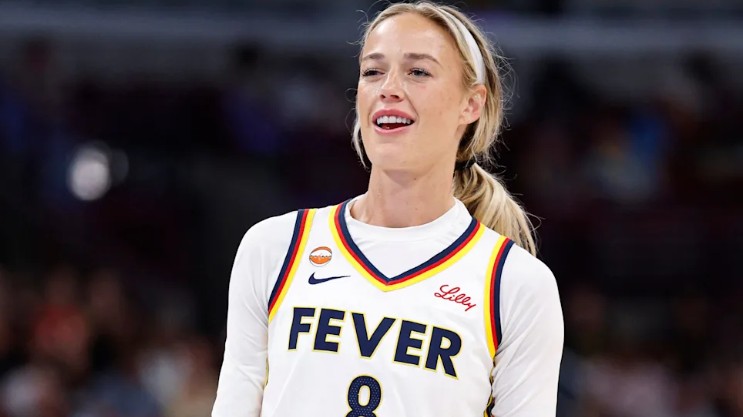
Cunningham is a veteran WNBA guard for the Indiana Fever.
She played college basketball at the University of Missouri before being selected by the Phoenix Mercury with the 13th pick in the second round of the 2019 WNBA Draft.
She later joined the Fever and became part of a team that receives enormous attention because of one very famous teammate:
Caitlin Clark.
The WNBA’s explosive growth around Clark has brought millions of new eyes to Indiana.
That means everything surrounding the Fever gets magnified.
A hard foul becomes a national debate.
A social-media post becomes a headline.
And a player’s opinion on a controversial issue can suddenly become part of America’s larger culture war.
That’s exactly what happened to Cunningham.
The Comment That Changed Everything
The biggest controversy began when Cunningham publicly spoke about transgender athletes competing in women’s sports.
Her position was clear.
She said she believes women’s sports should protect female athletes and argued that transgender athletes should not compete against biological women.
Cunningham has defended her position as an issue of fairness and safety rather than hatred.
She has also said she doesn’t intend to hide her views simply because other people disagree with her.
That stance immediately split WNBA fans.
Some applauded her.
Others accused her of promoting anti-transgender views.
Soon, the discussion moved far beyond basketball.
Why Did Conservatives Rally Around Sophie Cunningham?
This is where the story gets especially interesting.
Cunningham’s comments resonated with a large audience outside the traditional WNBA fan base.
Some conservative commentators and activists began portraying her as a rare WNBA player willing to publicly challenge progressive views within women’s sports.
She was even given nicknames such as “MAGA Barbie.”
Meanwhile, supporters began showing up outside Fever games to demonstrate in support of her position.
Cunningham has said she was not involved in organizing those rallies.
She described them as people exercising their own freedom of speech and said she would continue focusing on basketball.
That distinction matters.
Cunningham wasn’t simply becoming popular because of what she did on the court.
She was becoming a cultural figure.
And once that happens, every game becomes a little more complicated.
The WNBA Pushes Back
The league eventually had to address the growing transgender-athlete debate.
The WNBA said it was concerned about what it described as bad-faith efforts to turn transgender participation into a divisive issue.
The league also emphasized that there was not an active eligibility crisis involving transgender players.
That is an important detail.
The online debate can make it sound as if the WNBA is currently dealing with a large number of transgender athletes trying to enter the league.
That’s not what is happening.
Instead, the controversy is largely about what the rules should be going forward.
The WNBA has said eligibility rules are a matter for the league and players’ union to address, while also emphasizing respect, player safety and fair competition.
So the real question isn’t simply:
“Is there a transgender player in the WNBA?”
It’s:
“What should the WNBA’s policy be if that question becomes an issue in the future?”
And Cunningham has made her answer very clear.
Then Came DiJonai Carrington
Just when the transgender debate was dominating the conversation, Cunningham found herself at the center of another controversy.
This time, it happened on the basketball court.
During an Indiana Fever game against the Chicago Sky on Aug. 8, Sky guard DiJonai Carrington committed a hard foul on Cunningham.
Carrington was assessed a Flagrant 2 and ejected.
The play itself was intense.
But what happened afterward sent the story into another dimension.
Carrington posted the words:
“WHITE PRIVILEGE @indianafever”
on social media.
Suddenly, the conversation wasn’t just about a foul.
It was about race.
Was Carrington Saying Cunningham Got Special Treatment?
That’s how many people initially interpreted the post.
The timing certainly made it look that way.
Carrington, a Black player, had just been ejected after a foul on Cunningham, who is white.
So some fans immediately connected the incident to racial bias.
Cunningham rejected that interpretation.
And Carrington later clarified that her “white privilege” comment was not about the ejection itself.
She said the comment was connected to a broader discussion about systemic issues in sports rather than claiming that the referee ejected her because Cunningham is white.
That clarification did not make the controversy disappear.
If anything, it created another debate.
People were now arguing about whether the original post had been appropriate, what it meant, and whether race had anything to do with the officiating.
Sophie Cunningham Didn’t Stay Quiet
Cunningham has never been known as a player who avoids confrontation.
After the Carrington incident, she pushed back against the idea that the situation was about racial favoritism.
She also criticized the notion that she received special treatment.
And that brought another interesting detail into the story.
Cunningham herself has previously been involved in controversial physical plays.
So her argument was essentially:
If the league has punished similar plays before, why should this one be treated differently?
That question became one of the major points of discussion among fans.
Then Everyone Started Talking About Stephanie White
Indiana Fever head coach Stephanie White was also pulled into the controversy.
Some fans and commentators accused White of not doing enough to defend Cunningham following the Carrington incident.
White strongly rejected that criticism.
And she did not respond quietly.
In a fiery statement, White said the hate, fearmongering and divisiveness attempting to hijack the league would not win.
She also pushed back against what she described as online narratives that simply didn’t exist.
Cunningham then publicly defended White.
She said she has a great relationship with her coach and that the Fever would continue to support her.
Suddenly, the story had another layer:
Could outside controversy actually become a distraction inside the Fever locker room?
The Answer From the Fever: Keep Playing Basketball
This may be the most important part of the entire story.
Despite everything happening online, Cunningham has repeatedly insisted that her priority remains basketball.
She has said she comes to work, plays her role and focuses on her teammates.
That’s not just talk.
The Fever have continued playing while Cunningham remains part of the rotation.
And White has repeatedly emphasized that the team needs to focus on basketball rather than allowing outside political battles to take over.
That may be easier said than done.
Because the controversy isn’t staying outside the arena.
Protests Started Showing Up at Games
Supporters of Cunningham’s position organized demonstrations outside several Fever games.
The protests were relatively small, but the media attention was much larger.
At one game, supporters reportedly held signs backing Cunningham.
At another, a rally was held outside the arena.
Cunningham said she wasn’t involved with organizing the demonstrations and viewed them as people exercising their right to speak.
But the optics were impossible to ignore.
The WNBA has traditionally been associated with progressive social causes.
Now one of its most visible players was attracting conservative activists and political attention.
That is a major shift.
And Then Came the Reddit Controversy
If you thought the story couldn’t get stranger, it did.
On Cunningham’s 30th birthday, reports emerged that the largest WNBA subreddit had restricted use of her name and related terms.
The reported reason?
Trolling.
According to reports, Cunningham-related discussions had attracted large numbers of people who were not regular WNBA fans and were using the threads to fight about transgender athletes, politics and culture-war issues.
So moderators reportedly took steps to limit those discussions.
And that immediately created a brand-new argument:
Is moderation censorship?
Supporters of Cunningham said the move was ridiculous.
Critics argued that moderators were simply trying to keep a basketball community from being overwhelmed by political trolling.
There’s an important distinction here.
A subreddit is not the same thing as the WNBA itself.
Reddit communities are independently moderated spaces.
So claims that the WNBA officially banned Cunningham’s name would be misleading.
The controversy was about moderation within a Reddit community, not a league-wide ban.
Why Did Her Birthday Become a Controversy?
Think about how strange this sounds.
A professional athlete turns 30.
Her league posts:
Happy Birthday!
Fans should be celebrating.
Instead, the post becomes a political battlefield.
Some fans call Cunningham a legend.
Others criticize her views.
Some supporters accuse the WNBA of treating her unfairly.
Others argue that she is receiving an enormous amount of attention precisely because of her controversial statements.
The birthday itself became almost secondary.
And that tells you just how big the Cunningham story has become.
Sophie Cunningham Is No Longer Just a Basketball Player
This may be the biggest change of all.
Cunningham has become a symbol.
For some people, she represents a player willing to speak openly about women’s sports.
For others, she represents an anti-transgender position they strongly oppose.
For some fans, she’s simply a tough Fever guard who happens to have controversial opinions.
For others, she’s become part of a much larger political movement.
And that’s why the same person can be described in completely opposite ways depending on which side of the internet you’re reading.
Four Different Arguments Are Colliding Here
The Cunningham controversy isn’t really one controversy.
It’s at least four.
1. Women’s sports and competitive fairness
Should women’s professional sports be restricted based on biological sex?
Supporters of Cunningham say yes.
They argue that women’s leagues exist specifically to create a fair competitive environment for female athletes.
2. Transgender rights
Critics argue that transgender people should not be excluded or portrayed as threats simply because of their gender identity.
This makes the debate about much more than basketball.
It becomes part of the broader American debate over transgender rights.
3. Free speech
Can a WNBA player openly disagree with the political or social positions commonly associated with her league?
Cunningham’s supporters say absolutely.
Critics counter that free speech doesn’t mean people are protected from criticism or consequences.
4. Social-media moderation
And then there’s Reddit.
Should moderators remove controversial discussions when outsiders flood a community and turn every thread into a political fight?
Or does that become censorship?
Again, there is no simple answer.
What About Caitlin Clark?
Caitlin Clark’s presence makes all of this even bigger.
Clark is one of the biggest stars in women’s basketball.
She has helped bring new fans to the WNBA and turned the Indiana Fever into one of the most closely watched teams in the league.
That means Cunningham is not playing in isolation.
Every controversy surrounding the Fever receives significantly more attention.
Clark has generally avoided making herself the center of the transgender debate and has emphasized that these policy questions are better handled through the league, players and relevant decision-makers.
That approach contrasts sharply with Cunningham’s willingness to publicly state her own position.
And that difference is fascinating.
Two Fever teammates.
Two very different approaches to the spotlight.
The Biggest Misunderstanding About the Cunningham Story
It’s tempting to reduce everything to:
“Sophie Cunningham got canceled because of her opinion.”
But that’s too simple.
The real story is much bigger.
It’s about how sports, politics and social media now overlap.
A basketball player makes a statement.
Political groups rally around her.
Fans protest outside games.
Another player posts about race.
A coach gives a fiery press conference.
A Reddit community changes its moderation rules.
The WNBA issues a statement.
And suddenly a regular-season basketball game becomes part of America’s culture war.
That’s the world professional sports now operate in.
Could This Actually Help Sophie Cunningham?
Ironically, controversy may be making Cunningham more famous.
Her name is now appearing in national sports coverage far more frequently.
She’s attracting new followers.
Her supporters are buying merchandise.
She’s being discussed by people who may not have watched a Fever game before.
There have even been reports that Cunningham is shopping the idea of a tell-all book about her experience.
That’s the strange economics of the internet.
Controversy can hurt a reputation.
But it can also create an enormous audience.
And Cunningham appears to have discovered that the second effect can be powerful.
The Story Isn’t Over Yet
The transgender debate isn’t going away.
Neither is the argument over race in women’s sports.
And neither is the question of how much political disagreement the WNBA can absorb without losing sight of basketball.
The league has said it wants respectful discussion and has condemned efforts it considers bad-faith attempts to inflame the transgender issue.
Meanwhile, Cunningham continues to say she isn’t going to hide who she is.
That means another controversial moment could be only one post, interview or game away.
And the bigger her profile becomes, the louder the reaction will be.
So, What’s Really Going On With Sophie Cunningham?
Here’s the simplest way to understand it:
Sophie Cunningham became controversial because she publicly took a position on one of America’s most divisive issues.
Then that controversy collided with:
- Caitlin Clark’s enormous popularity
- the Fever’s growing national profile
- transgender-athlete debates
- protests outside WNBA games
- a hard foul involving DiJonai Carrington
- a separate argument over race
- criticism of coach Stephanie White
- social-media moderation
- and America’s ongoing culture war
That’s why her name keeps showing up everywhere.
It’s not just about one foul.
It’s not just about one comment.
And it’s definitely not just about one birthday post.
It’s about what happens when sports stop being only sports.
The Question the WNBA Still Has to Answer
The most interesting part of the Sophie Cunningham controversy may actually be what happens next.
Can the WNBA allow players to hold very different political and social opinions while keeping the league united?
Can it protect transgender athletes from harassment while still allowing legitimate debate over eligibility rules?
Can players criticize one another without every disagreement becoming a racial or political battle?
And can fans disagree without turning every game into a culture-war referendum?
Those questions don’t have easy answers.
But Cunningham’s story has made them impossible to ignore.
She turned 30 on Aug. 16.
Instead of simply celebrating another birthday, she became the latest symbol in a much larger American argument about women’s sports, identity, race, politics and free speech.
And for better or worse, the Sophie Cunningham controversy is nowhere near finished.