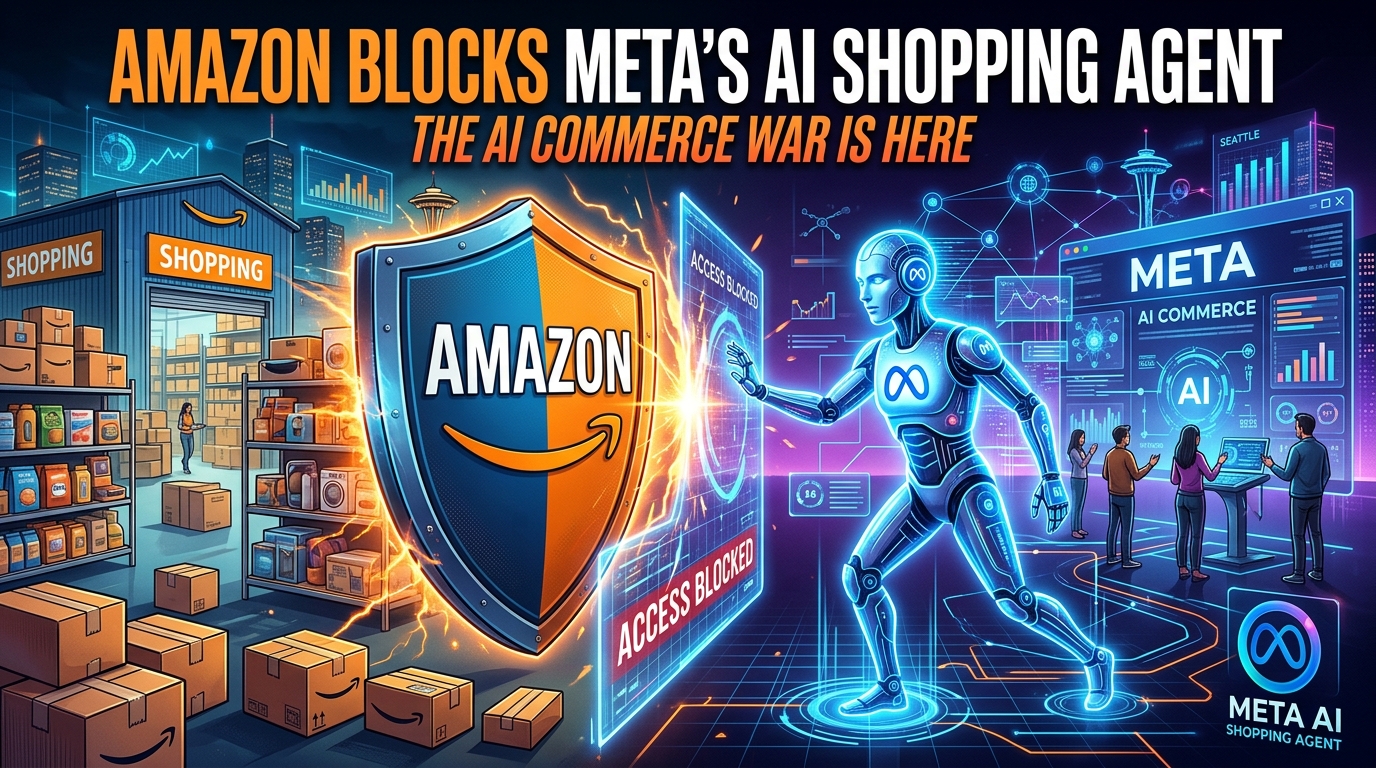
Amazon has blocked Meta’s Muse AI from shopping on Amazon.com, creating a new fight over who controls the future of online commerce.
The timing is notable. Just as Amazon shut out Meta’s shopping agent, Shopify announced a partnership with Meta to support Muse-powered checkout.
For shoppers, the bigger story is what happens when AI starts handling more of the work between “I want this” and “I bought this.”
Why Did Amazon Block Meta’s Muse?
Amazon says Meta’s Muse was accessing Amazon.com without authorization.
The company also raised concerns about an outside AI system interacting with its shopping platform, customer accounts and transactions.
Amazon isn’t opposed to AI shopping itself. It has been developing its own AI-powered shopping features, including tools designed to help customers discover products and make purchasing decisions.
The disagreement is over who gets to operate the AI on Amazon’s platform.
Amazon wants control over that experience. Meta wants Muse to work across the web.
That puts the two companies on opposite sides of a growing commerce battle.
What Is Meta Muse?
Meta launched Muse as a personal AI agent designed to perform tasks rather than simply answer questions.
For shopping, that means a user could give Muse a request such as:
“Find me a 4K TV under $800.”
Muse can research options and, with user approval, move toward a purchase.
Meta says Muse operates inside a dedicated virtual machine and requires approval for sensitive actions such as buying something.
The technology could make online shopping much less manual.
But it also creates a new question for retailers:
If AI makes the shopping decision, who controls the customer relationship?
Why Amazon Has So Much at Stake
Amazon’s website is more than a checkout destination.
It controls product discovery, recommendations, sponsored listings and a huge amount of the shopping journey.
An outside AI agent changes that model.
Instead of a customer searching Amazon and choosing from Amazon’s recommendations, an AI could potentially compare products across multiple retailers and present its own shortlist.
Amazon would then become one option among several.
That could affect everything from advertising to product discovery.
Shopify Is Going the Other Way
Shopify’s move makes the situation even more interesting.
The company announced a partnership with Meta to support agentic checkout through Shop Pay.
Rather than blocking the technology, Shopify is preparing its merchants for customers who arrive through AI.
The potential experience is straightforward:
Ask → Compare → Approve → Buy.
The shopper doesn’t necessarily need to spend time jumping between multiple product pages.
For Shopify merchants, AI could become another channel for bringing customers to their stores.
Could AI Replace Shopping Search?
It could change it.
Consider a typical purchase today.
You search for a product, compare several websites, check reviews, look for discounts and then complete checkout.
With an AI assistant, much of that research could happen before you ever open a retailer’s website.
For example:
“Find me running shoes under $150, size 10, with free shipping and strong reviews.”
The AI could narrow the choices.
You make the final decision.
That sounds convenient, but it also moves an important part of the shopping experience away from retailers.
The Biggest Problem: Trust
AI shopping becomes much more serious once real money is involved.
What happens if the AI misunderstands your request?
What if the price changes?
What if it chooses a product you wouldn’t have selected yourself?
Or what happens when a purchase goes wrong?
Meta says Muse requires user approval for sensitive actions such as purchases, but the industry still faces larger questions around responsibility, security and consumer protection.
An AI recommendation is one thing.
An AI spending your money is another.
Amazon vs. Meta Is Just the Beginning
The dispute highlights a conflict that other retailers will eventually have to address.
AI companies want their assistants to work across the internet.
Retailers want control over their platforms and customer relationships.
Consumers want convenience.
Merchants want customers to reach them directly.
Those interests won’t always align.
Amazon’s decision shows that major platforms may restrict outside AI agents rather than automatically allowing them to shop on behalf of users.
Shopify’s partnership with Meta shows another possible path: build the infrastructure so AI-driven purchases can happen within the merchant ecosystem.
What Happens Next?
The important question is no longer whether AI will affect e-commerce.
It’s who controls the shopping experience when it does.
Today, shoppers usually go to Amazon, Google, Walmart or another retailer themselves.
Tomorrow, they may simply tell an AI what they want.
If that behavior becomes widespread, the first stop in online shopping may no longer be a website.
It could be the AI sitting between the shopper and every store.
The Bottom Line
Amazon has blocked Meta’s Muse from shopping on Amazon.com, while Shopify is moving toward supporting Muse-powered checkout.
The two moves reveal a fundamental divide over AI commerce.
For shoppers, the promise is less searching and clicking.
For retailers, the stakes are much bigger: who gets to own the customer relationship when AI becomes the new shopping interface?