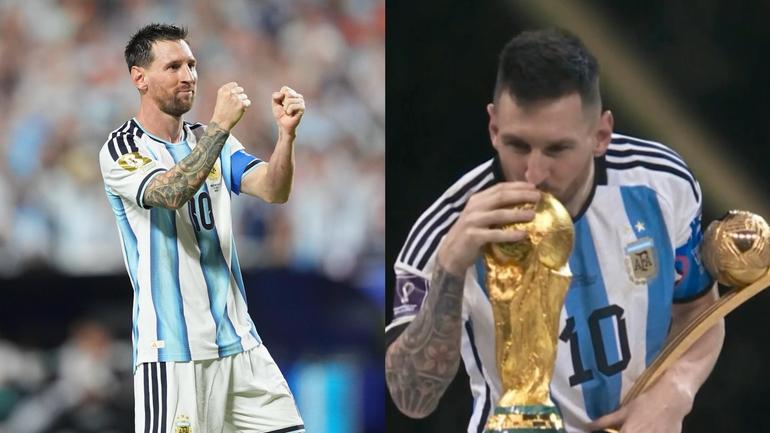
Lionel Messi has officially said goodbye to Argentina.
After more than two decades of international football, six World Cups, a World Cup title, two Copa América championships and countless unforgettable nights in the famous blue-and-white shirt, the 39-year-old superstar has announced his retirement from the Argentina national team.
Messi revealed the decision on Instagram on August 31, 2026, in an emotional message to supporters. He admitted that the decision hurt deeply, but said he understands that the time has come.
And there is one detail that makes the announcement even more emotional: Messi said he had already written the farewell message just two days after Argentina lost the 2026 World Cup final to Spain.
His father’s death earlier in August then made him even more certain that it was time to close this chapter.
For football fans around the world, the announcement marks the end of one of the greatest international careers the sport has ever seen.
But Messi’s story with Argentina was never simply about trophies.
It was a story about pressure, heartbreak, redemption, persistence — and finally, glory.
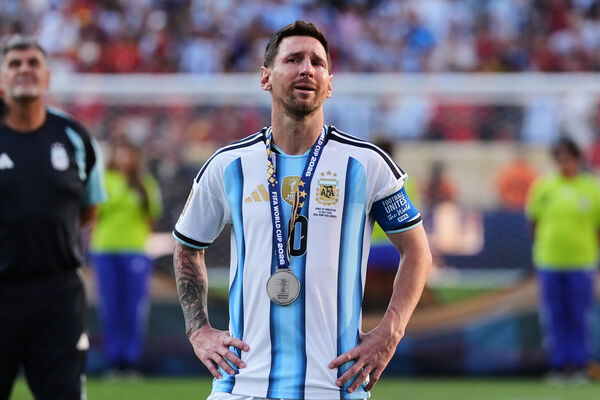
Messi’s Argentina Goodbye Comes After 20 Years of History
When Messi first appeared for Argentina in 2005, few could have imagined just how enormous his international career would become.
Nearly 21 years later, he leaves the national team holding records that may stand for generations.
According to Reuters, Messi finished his Argentina career with 207 appearances and 125 goals, both extraordinary numbers for an international player.
He also played in six World Cups.
Six.
That means an entire generation of football fans grew up watching Messi wear Argentina’s No. 10.
For younger fans, Messi was not simply one of the best players on the team.
He was Argentina.
His international journey, however, did not begin with easy victories.
Far from it.
Before the trophies came years of criticism and painful defeats.
And that is exactly what makes the ending so powerful.

“I Gave Everything I Had”
Messi’s retirement message was not a short announcement.
Instead, he wrote directly to the people who had followed him throughout his journey.
He explained that the decision was painful, but that he understood the moment had arrived.
He also made something very clear: he believed he had nothing left to prove.
Messi said he had always given everything for the Argentina shirt — not only during the years when the team finally began winning major trophies, but also during the difficult years that came before them.
That distinction matters.
Because Messi’s Argentina career cannot be understood simply by looking at the 2021–2024 trophy run.
The road to that golden era was filled with disappointment.
There were lost finals.
There were missed opportunities.
There were moments when Messi was blamed for Argentina’s failures.
And there was even a point when he temporarily walked away from international football.
Yet he came back.
And then everything changed.
The Painful Years Before Argentina Finally Won
For years, Messi carried an almost impossible burden.
Every time Argentina failed to win a major tournament, the spotlight turned toward him.
The comparisons with Diego Maradona became relentless.
Could Messi truly become Argentina’s greatest player without winning a World Cup?
That question followed him for years.
The 2014 World Cup was especially painful.
Argentina reached the final in Brazil, with Messi leading the team.
But Germany won 1–0 in extra time.
Messi walked away with the Golden Ball, but not the trophy Argentina desperately wanted.
Then came another heartbreak.
In the 2015 Copa América final, Argentina lost to Chile on penalties.
A year later, Argentina again lost the Copa América final to Chile — again on penalties.
That defeat proved particularly devastating.
In the aftermath, Messi announced his retirement from international football.
It seemed possible that the greatest chapter of his Argentina career had ended without the major international trophy many believed he needed.
But Messi wasn’t finished.
The Comeback Changed Everything
Messi eventually returned to the national team.
And the next chapter became almost unbelievable.
Argentina won the 2021 Copa América, defeating Brazil in the final at the Maracanã.
For Messi, it was an enormous emotional release.
After years of criticism and near misses, he finally lifted a major international trophy with Argentina.
But that was only the beginning.
One year later came the tournament that changed his legacy forever.
Qatar 2022: The World Cup Messi Had Chased His Entire Life
The 2022 FIFA World Cup in Qatar became the defining chapter of Messi’s career.
Argentina began the tournament with a shocking defeat to Saudi Arabia.
Suddenly, the team was under pressure.
But Argentina recovered.
Messi delivered.
And game after game, the tournament became increasingly centered around the Argentine captain.
Then came the final against France.
It was chaos.
It was drama.
It was everything a World Cup final should be.
Messi scored twice, France’s Kylian Mbappé produced a hat-trick, and the match eventually went to penalties.
Argentina won the shootout.
Messi finally lifted the World Cup.
The image of him holding the trophy in his hands became one of the defining sports photographs of the 21st century.
The debate that had followed him for so long was finally over.
Messi was a world champion.
And he had done it wearing Argentina’s famous No. 10.
Then Came Another Copa América
Some players might have considered the World Cup the perfect ending.
Messi didn’t.
In 2024, Argentina won another Copa América.
It was his second Copa América title.
By that point, Messi had achieved something that had once looked almost impossible.
World Cup champion.
Multiple Copa América titles.
And the status of Argentina’s undisputed modern football icon.
The question was no longer whether Messi could win with Argentina.
It was how long he would continue.
2026 World Cup: The Final Chapter
The 2026 World Cup offered one last possibility.
Messi was 39 years old.
Nobody knew exactly how much football remained in his legs.
But Argentina reached the final again.
For the second consecutive World Cup, Messi found himself just one game away from another world title.
This time, however, the fairytale ending did not happen.
Argentina lost 1–0 to Spain after extra time in the July 19 final.
The defeat ended Argentina’s attempt to defend the World Cup.
It also became Messi’s final match for the national team.
Reuters reported that Messi had already written his farewell message on July 21, just two days after the final.
That detail changes the way the final is viewed.
At the time, fans may have wondered whether Messi would return.
But behind the scenes, he had apparently already made his decision.
The final was the end.
Why Did Messi Retire Now?
There is no single reason.
Instead, several pieces of Messi’s life appear to have come together.
First, age.
At 39, Messi is obviously entering the final stage of his playing career.
Second, the natural transition of the Argentina team.
In his retirement message, Messi pointed toward the young players coming through.
He made it clear that there is new talent ready to take their opportunities.
That is an important part of his decision.
Messi does not appear to want to stay simply because of his name.
He understands that national teams must eventually move forward.
And then there is the most personal factor of all.
His father.
The Death of Jorge Messi Made the Decision Even More Personal
Messi’s father, Jorge Messi, died earlier in August.
The loss came only weeks after the World Cup final.
Jorge had been an enormously important figure throughout Lionel Messi’s life and career.
His father was there long before the trophies, the global fame and the millions of fans.
He was there when Messi was simply a talented boy dreaming of becoming a professional footballer.
Following his father’s death, Messi spoke about having serious doubts regarding how much longer he would continue playing.
That loss appears to have reinforced the decision he had already been considering.
Reuters and other reports noted that Messi’s father’s death strengthened his conviction that the time had come to step away from international football.
For Messi, the decision was therefore about more than football.
It was about life.
About family.
About time.
And about recognizing when one chapter has reached its natural conclusion.
Messi Is Not Retiring From Football Entirely
There is an important distinction here.
Messi is retiring from Argentina — not necessarily from professional football.
The Argentine superstar continues his club career with Inter Miami in Major League Soccer.
Reports say his MLS contract runs through the end of the 2028 season.
That means fans could still see Messi playing club football for years to come.
The famous No. 10, however, will no longer be leading Argentina into international competitions.
For the first time in more than two decades, Argentina will have to prepare for major tournaments without Messi.
That is going to feel strange.
Very strange.
What Happens to Argentina Without Messi?
This may be the biggest question facing the national team.
Argentina now has to move into a post-Messi era.
The good news?
The team is not starting from zero.
Argentina remains one of the strongest football nations in the world, and the squad has developed a winning culture during Messi’s final years.
But replacing Messi is impossible.
You cannot simply find another player who scores 125 international goals, creates chances, controls matches and carries the emotional weight of an entire country.
Instead, Argentina must replace him collectively.
The next generation will have to create its own identity.
That is exactly what Messi seemed to acknowledge in his farewell.
He knows younger players deserve the opportunity.
And perhaps that is one of the most generous parts of his retirement.
The End of an Era — But Not the End of Messi’s Legacy
Football has always been obsessed with the idea of the perfect ending.
A player wins the World Cup.
Scores the winning goal.
Lifts the trophy.
Then walks away.
Messi did not receive that ending in 2026.
Instead, his final international match ended in a 1–0 defeat to Spain.
At first glance, that may sound disappointing.
But when you look at the entire story, it feels almost irrelevant.
Because Messi already achieved the thing that once seemed impossible.
He won the World Cup in 2022.
He won Copa América titles.
He became Argentina’s record appearance holder.
He became the country’s all-time leading scorer.
And perhaps most importantly, he changed the emotional relationship between himself and Argentine supporters.
The player who was once criticized for not winning enough with Argentina eventually became the captain who delivered the ultimate prize.
Messi’s Argentina Career in Numbers
Here is the simplest way to understand just how extraordinary his international career became:
Argentina appearances: 207
Argentina goals: 125
World Cups played: 6
World Cup titles: 1
Copa América titles: 2
International debut: 2005
Final Argentina match: 2026 World Cup final
The numbers are remarkable.
But statistics still don’t tell the whole story.
Messi’s real legacy is emotional.
Millions of Argentines watched him grow from a gifted teenager into the captain who finally brought the World Cup home.
And millions around the world experienced that journey with them.
“I Will Be One More Fan”
Perhaps the most touching part of Messi’s announcement was not the retirement itself.
It was what he said about the future.
Messi made clear that he would continue loving Argentina.
He simply would no longer be on the pitch.
Instead, he would become one of the supporters watching from outside the field.
Think about that for a moment.
For more than 20 years, fans watched Messi.
Now Messi will watch Argentina.
He will experience the nerves from the stands — or from home — rather than from inside the penalty area.
He will celebrate goals as a supporter.
He will suffer defeats as a supporter.
And he will watch the next generation attempt to build a new chapter.
The Boy Who Wanted to Make Argentina Proud
There is something almost poetic about the message Messi chose to leave behind.
Throughout his career, he repeatedly talked about representing Argentina.
The pressure was enormous.
The expectations were enormous.
But he continued.
Through the defeats.
Through the criticism.
Through the missed finals.
Through his brief retirement.
Through the years when people wondered whether he could ever deliver a major trophy.
He kept coming back.
Eventually, he delivered everything.
And now, at 39, he is walking away saying he has given all he had.
That may be the most fitting ending possible.
Not because Argentina won the final tournament.
But because Messi knows he left nothing unfinished inside himself.
A Generation Says Goodbye
For many fans, Messi’s retirement will feel surprisingly personal.
People who were children when he made his Argentina debut are now adults.
Some grew up watching his early Barcelona years.
Some watched the heartbreak of the 2014 World Cup.
Some watched him walk away after the 2016 Copa América.
Some watched him return.
Some watched him lift the 2022 World Cup.
And some watched his final game in 2026.
That is more than a football career.
It is a timeline of people’s lives.
Messi was there during childhood.
During school.
During university.
During relationships.
During jobs.
During family gatherings.
During late-night World Cup games.
His retirement therefore feels like more than a sports headline.
It feels like the closing of a chapter that millions of people shared.
What Comes Next for Lionel Messi?
The immediate answer is simple.
Inter Miami.
Messi’s club career continues, and unlike his Argentina career, there is no immediate announcement that he is retiring from football altogether.
That means the football world has not completely lost him.
Fans can still watch him play.
They can still watch him score.
They can still watch No. 10 on the field.
But something fundamental has changed.
There will be no more World Cup qualifying campaigns with Messi.
No more Copa América tournaments with Messi.
No more Argentina lineup announcement where fans search for the familiar No. 10.
No more waiting to see whether Messi can rescue Argentina one more time.
That part is over.
The Final Word
Lionel Messi’s retirement from Argentina is heartbreaking precisely because it feels real.
There is no dramatic announcement about walking away from all football.
There is no attempt to manufacture a perfect Hollywood ending.
Instead, there is a 39-year-old legend looking back at more than two decades of football and saying, essentially:
I gave everything I had.
And perhaps that is enough.
Messi leaves Argentina after experiencing almost every emotion the sport can offer — crushing defeat, criticism, doubt, redemption, triumph and, finally, peace.
He leaves as a World Cup champion.
He leaves as Argentina’s record appearance holder.
He leaves as the nation’s all-time leading scorer.
He leaves after six World Cups.
And he leaves knowing that another generation is waiting for its chance.
The final chapter did not end with Messi lifting another trophy.
It ended with Messi choosing to step aside.
For Argentine football, the next era begins now.
For Messi, the journey continues — just without the blue and white shirt.
And for millions of fans who watched him throughout the years, one truth remains:
Thank you, Leo.
The football world will never look quite the same without Messi wearing Argentina’s No. 10.