Politics can change in an instant.
Just weeks ago, many Republicans expected Senator Lindsey Graham to cruise toward another term. Instead, his sudden death triggered one of the fastest and most unpredictable Senate races in recent memory.
Now, South Carolina’s Republican special election has become a national political showdown, complete with surprise endorsements, internal GOP divisions, and an unusually crowded field of candidates.
And perhaps the biggest twist of all?
Donald Trump didn’t endorse one of the state’s best-known conservative lawmakers.
Instead, he backed Graham’s sister.
That single decision has completely reshaped the race—and many Republicans weren’t expecting it.
Why Is South Carolina Holding a Special Republican Election?
The special election was triggered after longtime Republican Senator Lindsey Graham died unexpectedly in July 2026 while running for reelection.
Because Graham had already secured the Republican nomination, South Carolina law required a rapid special Republican primary to determine who would replace him on the November general election ballot. The winner will face Democratic nominee Dr. Annie Andrews, but in a deeply Republican state, many analysts believe the GOP primary is effectively the race that matters most.
The timeline is incredibly compressed:
- Early voting: August 5–7
- Republican special primary: August 11
- Possible runoff: August 25
- General election: November 3
Trump’s Endorsement Changed Everything
Most political observers assumed Trump would endorse one of South Carolina’s established Republican politicians.
Instead, he encouraged Darline Graham, Lindsey Graham’s sister and the state’s interim senator, to run—and gave her his full endorsement. She later entered the race for a full Senate term after being appointed to temporarily fill her brother’s seat.
The decision surprised even longtime Republican insiders.
CNN reported that many South Carolina Republicans viewed Trump’s move as an unexpected “curveball,” with some questioning why an experienced statewide candidate wasn’t selected instead.
For a party that has largely unified behind Trump in recent years, this endorsement exposed new tensions inside South Carolina’s Republican establishment.
The Republican Field Is Crowded—and Competitive
Rather than producing an easy successor, Graham’s departure opened the door for one of the busiest Republican primaries in years.
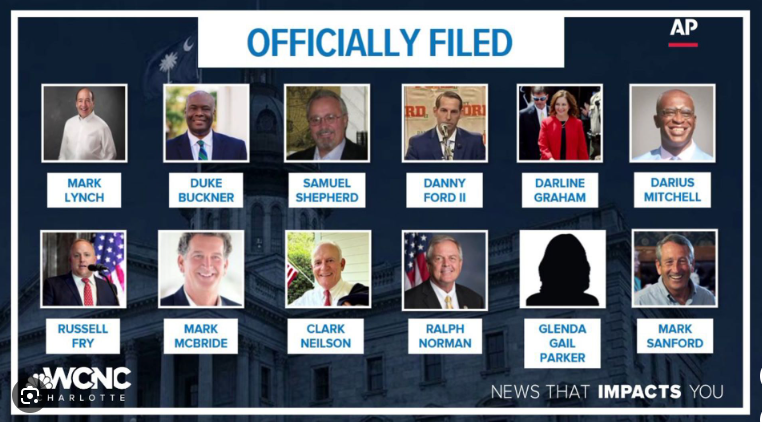
Among the best-known candidates are:
- Interim Senator Darline Graham
- Congressman Ralph Norman
- Congressman Russell Fry
- Former Governor Mark Sanford
- Businessman Mark Lynch
Several additional Republicans also entered before filing closed, creating a highly fragmented field where no candidate is expected to dominate outright. If nobody wins a majority on August 11, South Carolina law requires a runoff election between the top two finishers.
Five Candidates Will Face Off in a High-Stakes Debate
The first major opportunity for voters to compare the leading contenders comes during the scheduled Republican primary debate in Columbia.
With only days remaining before voting begins, the debate is expected to focus on:
- Immigration and border security
- Federal spending
- Trump’s America First agenda
- South Carolina’s economy
- Who is best positioned to keep the Senate seat safely Republican
Because the campaign calendar is unusually short, every televised appearance could significantly influence undecided Republican voters.
Why Republicans Are Divided
Normally, a Trump endorsement quickly settles a Republican primary.
This race appears different.
Some GOP activists argue Trump’s backing of Darline Graham honors Lindsey Graham’s legacy.
Others believe the Senate seat should be earned through political experience rather than family ties.
The disagreement has become one of the central storylines of the campaign, with conservative leaders debating whether loyalty to Trump or a competitive primary should determine the party’s future nominee.
Can Trump’s Endorsement Still Decide Elections?
That question now hangs over the entire race.
Trump remains enormously influential among Republican voters, but this special election may become one of the clearest tests yet of how much weight his endorsement still carries when multiple well-known conservative candidates compete for the same office.
Political analysts are watching closely because the outcome could provide clues about future Republican primaries across the country heading into the midterm election season.
Why This Race Matters Beyond South Carolina
At first glance, this might seem like a local Senate election.
In reality, it has national implications.
The Republican Party currently holds only a narrow Senate majority, making every competitive seat strategically important. The race also serves as an early test of Trump’s influence over candidate selection, party unity, and voter enthusiasm after the unexpected loss of one of his closest allies in Congress.
Just as importantly, the contest offers Republicans a glimpse into what the post-Lindsey Graham era may look like in one of the party’s strongest states.
What Happens Next?
All eyes now turn toward August 11, when Republican voters head to the polls.
If one candidate wins more than 50% of the vote, that person immediately becomes the Republican nominee.
If no candidate reaches a majority—a scenario many observers consider likely—the race continues with an August 25 runoff, extending what has already become one of the fastest and most dramatic Senate contests in recent memory.
Regardless of who ultimately wins, South Carolina’s special Republican primary has already become far more than a routine election.
It has evolved into a national political test—one that could reveal not only who succeeds Lindsey Graham, but also how the Republican Party chooses its future leaders in the Trump era.