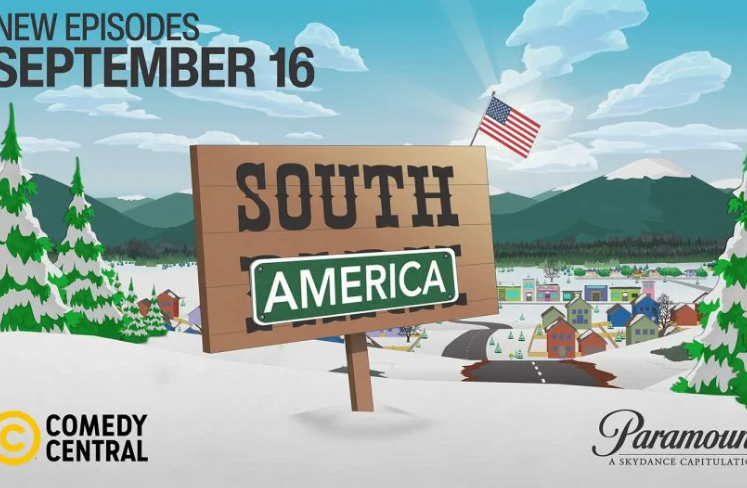
South Park is apparently becoming South America. At least, that is the joke Trey Parker and Matt Stone are making ahead of the animated comedy’s Season 29 premiere.
The creators have announced a tongue-in-cheek name change for the long-running series, turning its familiar title into “South America.” The move is being framed as a satirical response to Donald Trump’s push to rename places—and a playful jab at companies that have gone along with those changes.
For fans, the timing is almost too perfect. A new season is about to begin, and South Park is once again using a real-world political controversy as material for one of its trademark absurd jokes.
But is the show actually changing its name? And what exactly are Parker and Stone trying to say?
Is South Park Really Changing Its Name?
The short answer is: not in the ordinary sense of a permanent rebrand.
The announcement is a comedy bit, presented as a satirical name change rather than a serious attempt to replace the show’s identity. The joke works because the original title is so familiar. Seeing “South America” attached to the series immediately makes the audience wonder whether something genuinely unusual has happened.
That confusion is part of the appeal.
Rather than simply releasing a trailer or announcing a premiere date, the creators have turned the title itself into a punchline. It is a small change on paper, but a very recognizable one—and that makes it especially effective for social media, entertainment headlines, and fans who have followed the show for years.
The announcement also arrives at a moment when place names have become a particularly visible part of political and cultural debate. By borrowing that language, South Park is doing what it has always done: taking something people recognize from the real world and pushing it into an exaggerated, ridiculous direction.
Why “South America”?
The joke is aimed at Trump’s efforts to rename places, including the controversy surrounding the proposed renaming of the Gulf of Mexico as the “Gulf of America.”
The creators’ message is essentially: if places can be renamed, why not a television show?
That is the central gag. South Park is not trying to make the new name sound more accurate or geographically meaningful. It is using the logic of political rebranding against itself.
The title “South America” is especially funny because it sounds like a much bigger geographic concept than the small Colorado town associated with the show. The contrast between the familiar fictional town and an entire continent gives the joke an extra layer of absurdity.
It also creates an instantly recognizable headline. “South Park changes its name to South America” sounds like the kind of strange entertainment story that makes people stop scrolling.
And that is exactly the kind of attention the show’s creators know how to generate.
A Joke About More Than Trump
Although Trump is the obvious target, the announcement also takes aim at the broader culture of corporate and institutional compliance.
Parker and Stone reportedly joked that the move was inspired by the “bravery and patriotism” of Apple and Google—a sarcastic reference to companies that have adjusted their naming or presentation in response to political pressure.
The wording is important. “Bravery and patriotism” sounds like praise, but in the context of the joke, it is clearly being used ironically.
The creators are poking fun at the idea that changing a name can become a public demonstration of loyalty. Their version of that logic is deliberately ridiculous: if everyone else is willing to rename things, then South Park might as well rename itself too.
That is a familiar South Park technique. The show often takes a serious cultural argument, removes the surrounding formality, and turns it into something so exaggerated that the underlying contradiction becomes easier to see.
Why the Announcement Is Landing Ahead of Season 29
The timing gives the joke an extra boost.
South Park is preparing for its 29th season, so the name-change announcement arrives just as attention is already building around the show’s return. Instead of being an isolated political joke, it becomes part of the conversation surrounding a major television premiere.
That matters because South Park has a long history of using current events to attract attention before new episodes arrive. Fans expect the series to be provocative, and a political name-change gag is almost perfectly suited to that expectation.
The announcement also gives viewers something to discuss before the season even begins.
Will the name appear in the opening sequence? Is it part of a specific episode? Will the show continue using “South America” as a running joke? Or is the entire thing simply a promotional stunt?
Those questions help turn a short announcement into a much bigger entertainment story.
The Bigger South Park Tradition: Making Politics Look Ridiculous
For more than two decades, South Park has built its reputation on taking controversial subjects and presenting them through deliberately outrageous comedy.
The show’s creators, Trey Parker and Matt Stone, are known for making jokes that target politicians, celebrities, corporations, and cultural institutions. Their approach is rarely subtle, but it is often effective because it makes familiar arguments look strange when placed in an exaggerated setting.
The “South America” gag fits that tradition.
Rather than offering a long political statement, the creators are making a visual and verbal joke that audiences can understand almost immediately. The title changes, the political reference is recognizable, and the absurdity does the rest.
That simplicity is part of why the announcement has attracted so much attention. It does not require viewers to know every detail of the political debate. The joke is accessible even if someone has never watched a full episode of the show.
What Fans Should Expect From Season 29
The name-change announcement does not, by itself, reveal what the new season will contain. It does, however, offer a strong hint about the tone the creators are bringing into the premiere.
If the promotional material is any indication, political satire is still very much part of the show’s creative vocabulary.
Fans should not necessarily expect every episode to focus on Trump or place names. South Park has always moved between politics, celebrity culture, social issues, and everyday absurdity. But the announcement suggests that the creators are still interested in turning major public controversies into comedy.
And that is one reason the show remains so recognizable.
A series that has been on television for decades could easily become predictable. Instead, Parker and Stone continue to find ways to make the familiar feel unexpected—even if the surprise is simply seeing a beloved show suddenly call itself “South America.”
Why This Joke Works So Well Online
The announcement has several qualities that make it ideal for the modern entertainment news cycle:
- It is instantly understandable. The title change needs almost no explanation.
- It connects to a current political debate. That gives the joke immediate relevance.
- It involves a famous television series. Fans already have a reason to care.
- It creates a question. Is this a real rebrand or a joke?
- It is easy to share. A headline about South Park becoming South America is unusual enough to attract attention.
That combination is powerful. It allows a simple promotional gag to become a conversation about television, politics, corporate behavior, and the way public controversies are turned into entertainment.
The Bottom Line
South Park is not suddenly becoming a geography documentary. The “South America” name change is a satirical move designed to mock Trump’s renaming efforts and the companies that have played along with them.
But the joke works because it is so simple: take a familiar name, change it for political reasons, and make the absurdity impossible to miss.
As Season 29 approaches, Trey Parker and Matt Stone appear to be reminding audiences that South Park still knows how to turn a headline into a punchline.
And if the show really does spend part of its new season calling itself “South America,” fans will have one more reason to tune in and see just how far the joke goes.