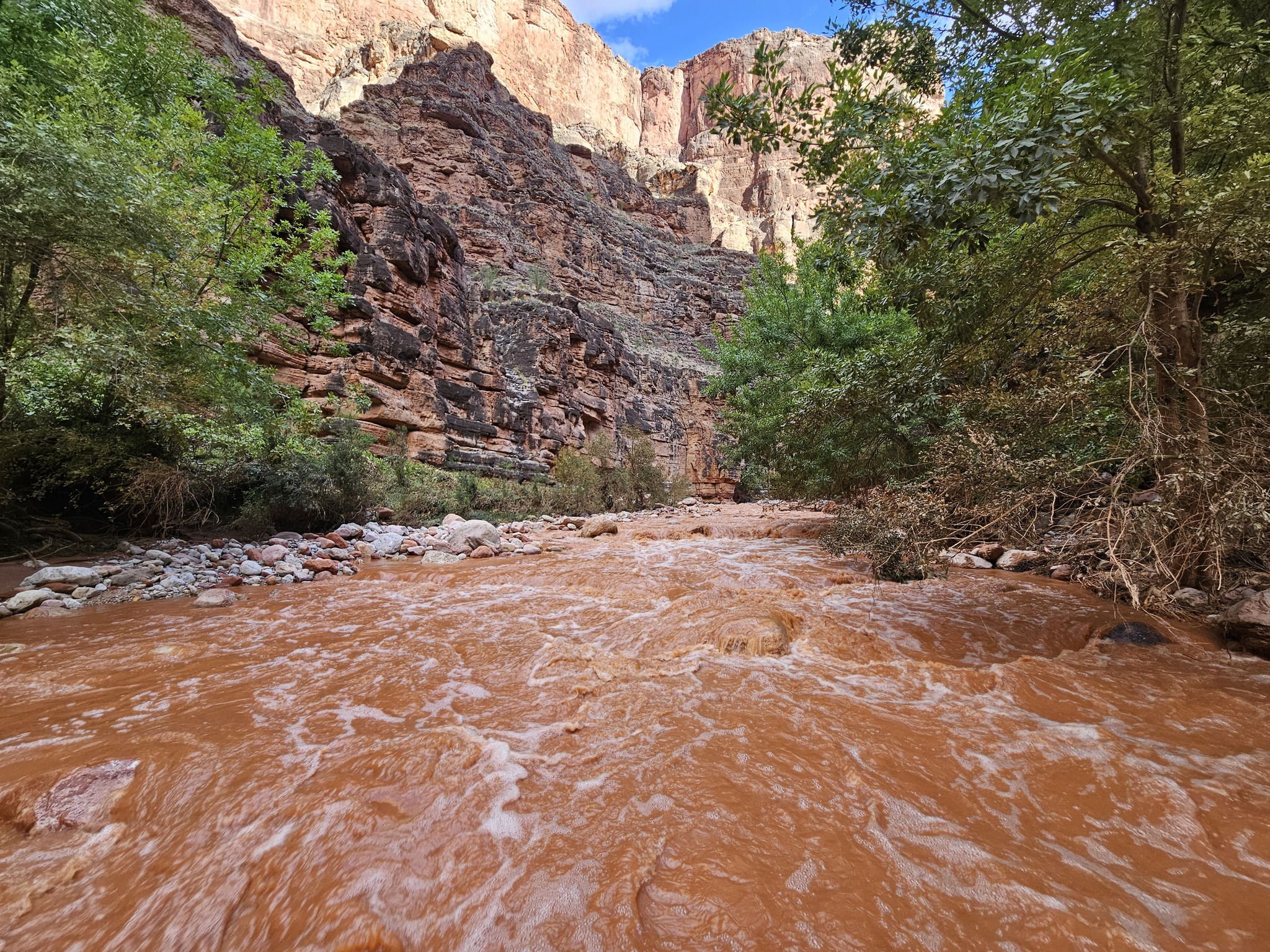
A beautiful summer afternoon at the Grand Canyon suddenly turned into a terrifying fight for survival.
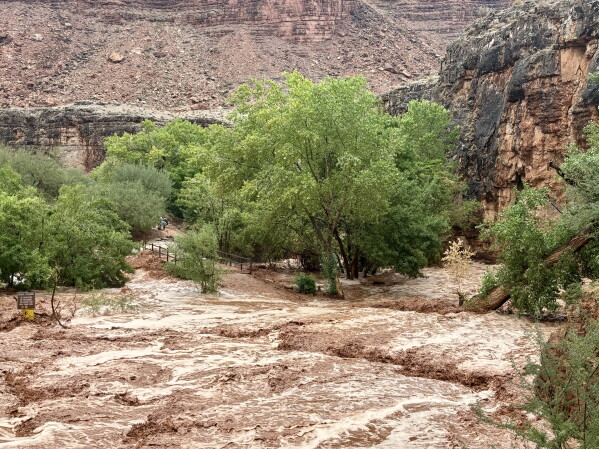
On Saturday, August 29, a powerful flash flood tore through the Bright Angel Canyon and Phantom Ranch areas of Grand Canyon National Park in Arizona, sending torrents of water, mud, rocks and debris through one of the canyon’s most rugged corridors.
Now, one person has been confirmed dead, about 15 people are reported missing or unaccounted for, dozens of hikers and campers have been evacuated by helicopter, and some of the park’s critical infrastructure has been badly damaged.
The situation remains active, with search-and-rescue teams working to determine exactly who was in the affected area when the flood struck. The National Park Service is also warning that more thunderstorms and heavy rainfall could create additional flash-flood, debris-flow and rockfall dangers.
This is a developing story, and the numbers may change as authorities account for hikers and backpackers who were in the canyon.
What Happened at the Grand Canyon?
The flash flood began at approximately 2:30 p.m. local time on Saturday in the Bright Angel Canyon and Phantom Ranch area.
What made the event especially dangerous was how quickly the water arrived.
According to weather information cited by officials, roughly half an inch to 1 inch of rain fell in about 30 minutes over steep, rocky terrain. Another weather station recorded approximately 1.17 inches between 2 and 3 p.m.
In the Grand Canyon, rainfall does not necessarily stay where it lands.
Instead, water can race down steep canyon walls and narrow drainage channels, concentrating enormous amounts of water in areas where hikers may have very little time to react.
The National Park Service said the flood caused significant damage throughout Bright Angel Canyon, including the destruction of nearly all footbridges crossing Bright Angel Creek.
Large boulders, metal structures and other debris were also pushed toward the Colorado River.
For people hiking or camping deep inside the canyon, the situation changed extraordinarily fast.
One moment, conditions could appear manageable.
Minutes later, floodwater and debris could be moving through the same corridor.
That speed is one of the defining dangers of flash flooding in the Grand Canyon.
One Person Has Died as Search Continues for Missing Hikers
The rescue operation has now become a search operation.
Authorities have confirmed that the body of a 46-year-old man was recovered near Crystal Rapids along the Colorado River.
The National Park Service and local authorities are continuing efforts to determine whether additional people remain missing.
The latest official information from the National Park Service asks the public to provide information about approximately 15 individuals who may be missing or unaccounted for following the flood.
Earlier reports had put the number higher, with officials initially seeking information about more than 20 people. That number was later revised as authorities began accounting for hikers and visitors.
That distinction matters.
Being listed as “missing” or “unaccounted for” does not necessarily mean someone is confirmed to have been caught in the flood.
Some people may simply have been in an area where communication is extremely difficult, may have left without being accounted for, or may have been separated from their travel groups.
But because the flooding destroyed infrastructure and dramatically changed conditions inside the canyon, authorities are treating the situation seriously.
The National Park Service is asking anyone who knows someone who may have been hiking or backpacking along the Bright Angel Creek corridor on August 29 to contact investigators.
That includes people who may have been traveling on the North Kaibab Trail, staying at Bright Angel Campground, visiting Phantom Ranch or traveling in an area known as “the Box.”
The NPS Investigative Services Branch can be reached at 888-653-0009. People providing information are asked to share details such as a missing person’s name, travel plans, group size, clothing or backpack description and last known location. Anonymous tips are accepted.
More Than 60 People Were Evacuated by Helicopter
The scale of the evacuation gives an idea of just how dangerous conditions became.
By Sunday morning, the National Park Service said 62 people had been evacuated from Phantom Ranch and the lower North Kaibab Trail.
Additional evacuations were planned from areas including Cottonwood Campground and Phantom Ranch.
Many evacuees were transported to the South Rim, where the American Red Cross was assisting those affected by the disaster.
For hikers who had entered the canyon expecting a normal adventure, the experience was anything but normal.
The canyon’s geography made escape especially difficult.
There are no simple roads running through the bottom of the Grand Canyon. Many locations are accessible only by hiking trails, river travel, mule transport or aircraft.
That means when a bridge disappears or a trail becomes unsafe, there may be no easy alternative route.
A helicopter can suddenly become the only practical way to move large numbers of people out.
Hikers Described a Terrifying Wall of Water and Debris
Accounts from people who experienced the flooding describe how quickly the situation escalated.
Hikers reported seeing the creek rise rapidly as rain intensified.
Water was accompanied by rocks, mud and other debris.
In some areas, people were forced to move toward higher ground and wait for rescue.
One hiker described seeing waterfalls seemingly appear from nowhere, along with boulders, mud and landslides.
Another survivor said the experience changed from an ordinary day in the canyon to panic within minutes.
That is exactly what makes flash floods so dangerous.
Unlike a slow-moving river rise, a flash flood can arrive before someone has time to pack a bag, gather equipment or walk a safe distance.
The warning signs may also be deceptive.
It does not necessarily need to be raining heavily at the location where a person is standing.
A storm farther upstream can send a surge of water into a canyon drainage.
By the time hikers hear the water, the flood may already be moving toward them.
The National Park Service specifically warns that flash floods can occur without warning and advises hikers near creeks to know the weather upstream and immediately move to higher ground if they hear a roaring sound.
Why Was the Flood So Powerful?
The Grand Canyon is an extraordinary landscape, but the same geography that makes it spectacular can also make it dangerous.
Bright Angel Creek runs through steep terrain before eventually reaching the Colorado River.
The elevation changes dramatically, with the creek dropping thousands of feet toward the river.
When intense rain falls over this type of terrain, gravity takes over.
Water moves downhill quickly.
And because the canyon contains narrow channels, the flow can become concentrated into a destructive surge.
Weather officials explained that much of the rainfall ran off almost immediately because of the steep and rocky environment.
That means a relatively small amount of rain can produce a disproportionately large flood.
In a normal city, an inch of rain spread across a broad area can be disruptive.
Inside a steep canyon drainage, the same rainfall can become a wall of moving water, mud and debris.
The Dragon Bravo Fire May Have Increased the Risk
There is another important piece of the story.
The Grand Canyon region has also been affected by wildfire.
The Dragon Bravo Fire damaged areas around the North Rim in 2025, leaving portions of the landscape more vulnerable to runoff and debris flows.
Wildfire can dramatically alter soil.
After a severe fire, vegetation that previously slowed water flow may be gone. Soil can also become less able to absorb rainfall.
When intense rain hits a recently burned landscape, water can move rapidly across the surface, carrying ash, soil, rocks, trees and other debris.
The National Park Service has specifically warned that several North Rim watersheds affected by the Dragon Bravo Fire have an elevated risk of flash flooding and debris flows during heavy storms.
That makes this week’s flood more than just a story about heavy rain.
It is also a reminder that wildfire and flooding can become connected hazards.
A landscape can be changed by fire long before the next major storm arrives.
Then, when intense rainfall finally comes, the consequences can be much more severe.
Bridges Were Destroyed Across Bright Angel Creek
The flood did not just threaten people.
It physically changed the canyon.
The National Park Service said nearly all footbridges spanning Bright Angel Creek were destroyed.
That effectively eliminated normal pedestrian access across parts of the creek.
For hikers, that creates an immediate safety problem.
A trail can technically still exist, but if the bridge that connects two sections has disappeared, the route may no longer be usable.
The flood also damaged trails, utilities, facilities and other infrastructure.
The Black Bridge and Silver Bridge crossings over the Colorado River were closed, while the Colorado River itself was temporarily closed to river traffic because metal structures and debris had entered the waterway.
The park has not provided a reopening date for the affected areas.
Phantom Ranch and North Kaibab Trail Are Closed
For anyone planning a Grand Canyon hiking trip, this is one of the biggest practical consequences.
The National Park Service has closed:
- Phantom Ranch
- Bright Angel Campground
- Phantom Ranch Canteen
- Phantom Ranch cabins
- The North Kaibab Trail from the North Kaibab Trailhead to Phantom Ranch
- Black Bridge
- Silver Bridge
The closures are in effect until further notice.
Officials have also warned that additional inner-canyon closures may become necessary depending on weather and damage assessments.
This is particularly important because the North Kaibab Trail is not an ordinary hiking route.
It is a demanding descent from the North Rim toward the Colorado River, covering roughly 14 miles one way and descending thousands of feet.
Under normal conditions, the route requires serious preparation.
After a major flash flood, the risk becomes significantly greater.
Collapsed bridges, unstable rocks, washed-out trails and debris can turn a difficult hike into a potentially life-threatening situation.
The Flood Also Knocked Out a Critical Water Pipeline
The damage goes far beyond trails and bridges.
One of the most serious consequences involves the park’s water system.
The flooding damaged the Transcanyon Waterline, a critical pipeline that supplies water to areas of Grand Canyon National Park.
The system is currently not operational.
Because of the resulting water shortage, the park announced major restrictions affecting overnight accommodations.
According to the latest reports, overnight lodging within the park is being closed beginning Monday, with no reopening date announced.
Visitors are also being asked to conserve water.
That is a remarkable consequence of a storm that lasted only a relatively short time.
A few hours of severe weather can disrupt infrastructure that supports thousands of visitors and residents.
The park has already been working on a major modernization project for the aging water system, reportedly involving an investment of about $208 million, with completion expected in 2027.
The latest flood demonstrates why that infrastructure matters.
Why the Grand Canyon Can Be So Dangerous During Monsoon Season
For many visitors, the Grand Canyon looks like an enormous, dry desert landscape.
That image can create a dangerous misunderstanding.
The canyon may be dry at one location while intense thunderstorms are producing heavy rainfall elsewhere.
During Arizona’s monsoon season, thunderstorms can develop rapidly.
A storm may dump large amounts of rain over a relatively small area.
That water then follows the terrain.
For someone hiking at the bottom of a canyon, the source of the water may be many miles away and completely out of sight.
This is why checking the weather only at the trailhead is not enough.
Hikers need to understand the entire drainage system and pay attention to upstream weather.
The National Park Service warns that flash floods can happen suddenly and advises visitors near waterways to have an escape route to higher ground.
Search Teams Face an Extremely Difficult Environment
Finding missing people inside the Grand Canyon is not like searching a normal neighborhood.
The terrain is enormous, steep and fragmented.
Communication is also a major challenge.
Cell service is limited or nonexistent across many sections of the canyon.
Some narrow areas are particularly difficult for signals to reach.
That makes it harder for hikers to call for help or tell family members that they are safe.
It also complicates the work of rescue teams trying to establish exactly who was in which location.
Authorities have been using helicopters to search affected areas and river corridors.
But weather can interfere with aviation operations, while unstable terrain, additional storms and debris create their own hazards.
The search is therefore happening under conditions that remain dangerous for rescuers as well as hikers.
More Severe Weather Could Still Be a Problem
Perhaps the most worrying part of the situation is that the storm threat was not necessarily over.
The National Park Service warned that additional thunderstorms and heavy rainfall were possible Sunday and Monday.
More storms could trigger:
- Additional flash floods
- Debris flows
- Rockfalls
- Rapidly changing trail conditions
- Dangerous river conditions
That creates a difficult situation for rescue teams.
They need to search for people who may still be missing while also protecting rescuers from another weather-related disaster.
The park has therefore urged people to stay away from closed areas.
Visitors already inside the canyon are being directed by park personnel and river operations officials.
What Happens Next?
The immediate priority is clear: find and account for anyone who may still be missing.
At the same time, park officials must determine the full extent of the damage.
That means inspecting trails, bridges, campgrounds, water systems and other facilities.
Some damage may be obvious.
Other problems may only become visible after floodwaters recede and crews can safely enter affected areas.
The National Park Service has not provided a reopening timeline for Phantom Ranch, Bright Angel Campground or the closed portion of the North Kaibab Trail.
That means travelers with upcoming Grand Canyon plans should not assume that the affected areas will reopen quickly.
Conditions can change rapidly.
What This Grand Canyon Disaster Reveals
The Grand Canyon is one of the world’s most recognizable natural wonders.
Millions of people visit each year to see its cliffs, hike its trails and experience the Colorado River from inside the canyon.
But the landscape is not static.
It is constantly being shaped by water, wind, rockfall, fire and erosion.
Saturday’s flash flood was a powerful reminder of that reality.
The event was not simply a case of “bad weather.”
A burst of intense rainfall interacted with steep terrain, narrow drainage channels, existing wildfire impacts and aging infrastructure.
The result was devastating.
One person has died.
About 15 people remain unaccounted for according to the latest official information.
More than 60 people have already been evacuated by air.
Bridges have been destroyed.
Trails have been closed.
The Colorado River has been temporarily shut to river traffic in the affected area.
And a critical water pipeline has been knocked offline.
The full consequences may take days or even weeks to understand.
The Search for Missing Hikers Continues
For now, the most important story is not the damage to the Grand Canyon’s infrastructure.
It is the people who may still be missing.
Authorities are asking anyone who knows that a friend, relative or hiking companion was in the Bright Angel Creek corridor, North Kaibab Trail, Bright Angel Campground, Phantom Ranch or nearby areas on August 29 to come forward.
Even small details could help investigators.
A person’s hiking plans.
Their last known location.
The color of their backpack.
The people they were traveling with.
The time they were expected to return.
All of those details can help authorities build a clearer picture of who was inside the canyon when the flood struck.
As rescue crews continue their work, the Grand Canyon remains a place of extraordinary beauty — but also extraordinary power.
And after a storm like this, the safest assumption is not that the canyon has returned to normal.
It is that the canyon has changed.
This is a developing story. Official information may change as search-and-rescue teams account for additional visitors and assess damage across the park.
Grand Canyon Flash Flood: Key Facts at a Glance
Date of flood: August 29, 2026
Approximate start time: 2:30 p.m. local time
Primary affected areas: Bright Angel Canyon and Phantom Ranch
Confirmed death: 1
People potentially missing/unaccounted for: Approximately 15, according to the latest NPS information
People evacuated: At least 62 by Sunday morning
Major damage: Footbridges, trails, facilities, utilities and water infrastructure
Major closures: Phantom Ranch, Bright Angel Campground, North Kaibab Trail and affected Colorado River crossings
Search effort: National Park Service and Arizona Department of Public Safety
Additional weather threat: Thunderstorms and heavy rainfall remained possible