Death toll rises as rescue crews race against time. Here’s everything we know so far—and why experts warn the danger isn’t over.
When the Ground Suddenly Turned Violent
One moment, people were shopping, eating lunch, driving home, or simply enjoying an ordinary summer afternoon.
The next, the ground beneath them erupted into violent shaking.
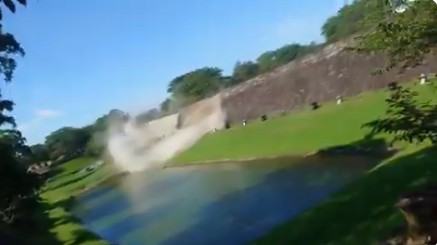
Within seconds, buildings swayed, store shelves crashed to the floor, roads cracked open, and power went out across parts of southern Japan. Parents grabbed their children. Office workers rushed beneath desks. Train passengers froze as emergency alarms echoed through stations.
For millions of people, time seemed to stop.
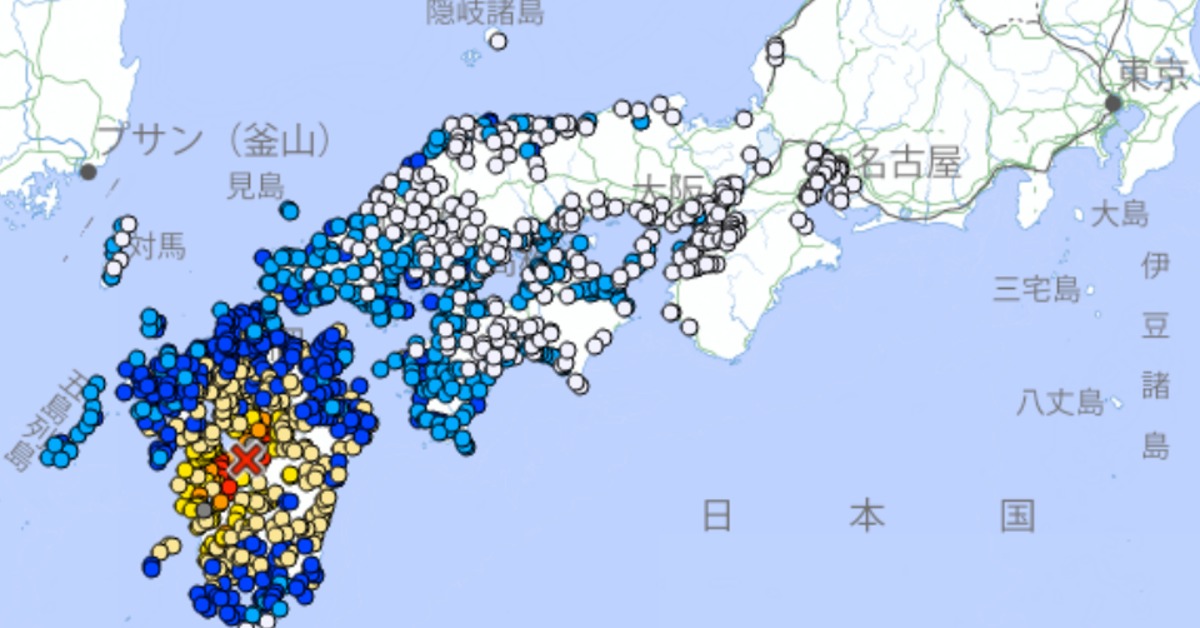
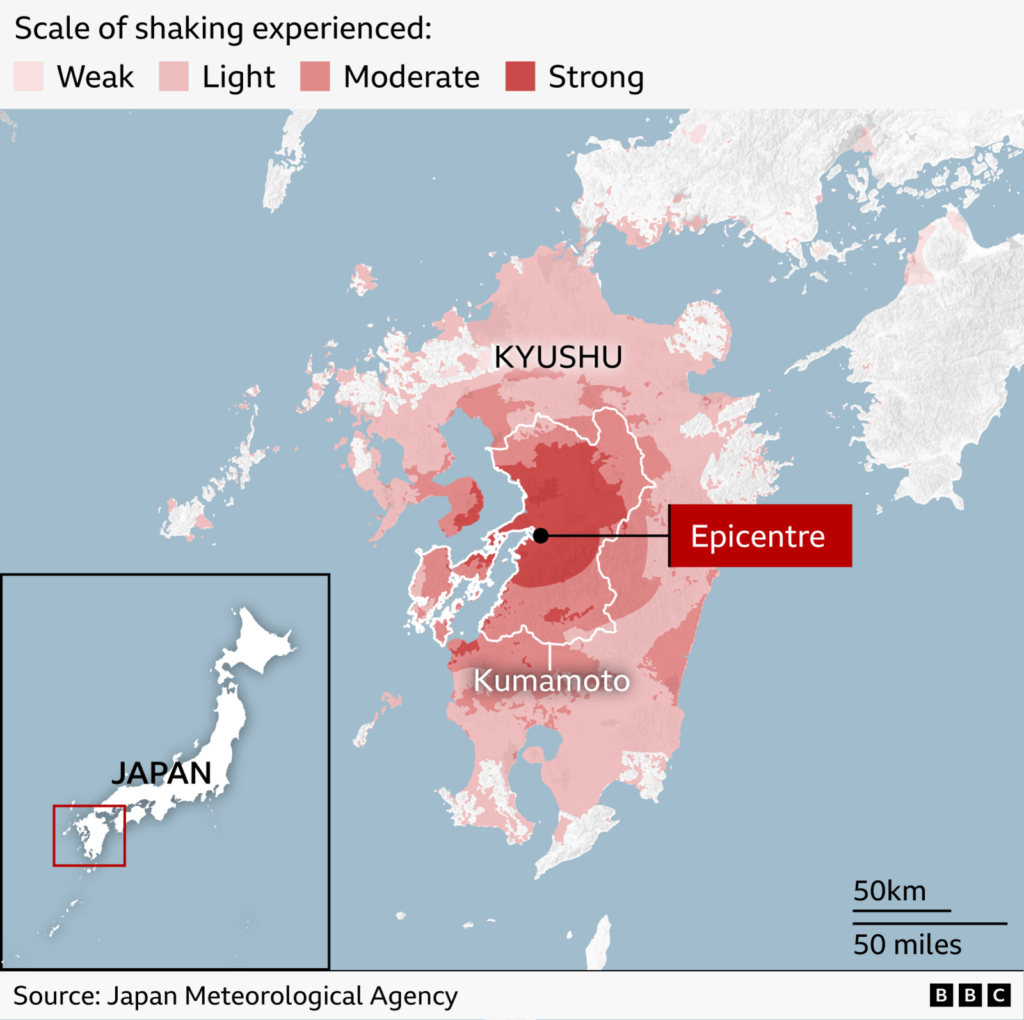
A powerful earthquake struck Japan’s Kyushu region, centered near Kumamoto Prefecture, triggering one of the country’s largest emergency responses in recent years. Rescue teams continue searching damaged neighborhoods while thousands of frightened residents remain in evacuation centers, uncertain when—or if—they can safely return home.
As aftershocks continue to rattle the region, authorities warn that the disaster is still unfolding.
A Country That Knows Earthquakes—Yet Still Faces Their Power
Japan is no stranger to earthquakes.
Located along the Pacific Ring of Fire, the country experiences thousands of earthquakes every year. Its buildings are engineered to withstand intense shaking, emergency alerts are among the fastest in the world, and earthquake drills are part of everyday life.
Yet even in one of the world’s most prepared nations, Mother Nature can still leave behind scenes of devastation.
The latest earthquake serves as another reminder that preparedness reduces risk—but it cannot eliminate it.
Emergency crews worked throughout the night, moving from collapsed homes to damaged commercial buildings, searching carefully for survivors who may still be trapped beneath piles of concrete, steel, and broken wood.
For families waiting outside damaged buildings, every minute feels like an eternity.
What Happened?
According to publicly available information, the earthquake struck near Kumamoto Prefecture on Japan’s southern island of Kyushu.
Different seismic agencies reported slightly different magnitude estimates during the initial hours following the event—a common occurrence after major earthquakes—but all agreed the shaking was extremely powerful.
Residents across much of Kyushu reported feeling violent tremors.
People described:
- Furniture thrown across rooms
- Windows exploding outward
- Ceiling lights swinging violently
- Roads splitting apart
- Utility poles shaking
- Car alarms sounding simultaneously
- Dust filling the air after structures collapsed
Many survivors later told local media that they initially believed the shaking would stop within seconds.
Instead, it seemed to continue far longer than expected.
For anyone who has experienced a major earthquake, those extra seconds can feel endless.
The First Images Shocked the World
Within minutes, dramatic videos flooded social media.
Security cameras captured entire buildings swaying from side to side.
Convenience stores showed products crashing from shelves as customers struggled to remain standing.
Apartment balconies shook violently.
Traffic cameras recorded vehicles bouncing as the pavement rippled beneath them.
Elsewhere, clouds of dust rose into the sky as older buildings partially collapsed.
Some videos showed people standing frozen in disbelief before instinct finally took over and they ran toward open areas.
Others simply held onto loved ones, hoping the shaking would stop.
Although Japan has one of the world’s most advanced earthquake warning systems, the force of a major quake can still arrive with little time to react—especially for communities located close to the epicenter.
Search and Rescue Begins Immediately
As soon as the shaking stopped, Japan’s emergency response system shifted into action.
Police officers, firefighters, paramedics, and disaster-response teams were dispatched across affected communities.
Military helicopters soon appeared overhead, surveying damaged neighborhoods from the air while rescue workers searched street by street for anyone needing immediate assistance.
Heavy machinery arrived to remove collapsed concrete.
Specialized search dogs were deployed to detect survivors beneath debris.
Medical teams established temporary treatment areas outside hospitals already receiving waves of injured patients.
Emergency workers understand one difficult reality:
The first 24 to 72 hours after a major earthquake are often the most critical.
Every hour can make the difference between life and death.
Families Spend a Terrifying Night Outside
As darkness fell, thousands of residents faced an impossible choice.
Should they return to homes that may have been structurally weakened?
Or spend the night outside, exposed to heat, uncertainty, and continuous aftershocks?
Many chose the second option.
Across Kumamoto and neighboring communities, families gathered in school gymnasiums, parks, parking lots, and official evacuation shelters.
Some slept inside their vehicles.
Others spread blankets across gymnasium floors.
Children clutched stuffed animals while parents checked news updates every few minutes, hoping to hear reassuring information.
Instead, many alerts warned of additional aftershocks.
Sleep became almost impossible.
Every small vibration triggered fresh anxiety.
Why Aftershocks Can Be Just as Dangerous
For people unfamiliar with earthquakes, the main quake often seems like the end of the disaster.
In reality, it is often only the beginning.
After a major earthquake, the Earth’s crust continues adjusting along the fault line.
That movement produces aftershocks.
Some are too weak to notice.
Others are powerful enough to cause additional building collapses.
Structures already damaged during the initial earthquake become significantly more vulnerable.
A wall that survived the first tremor may fail during a later aftershock.
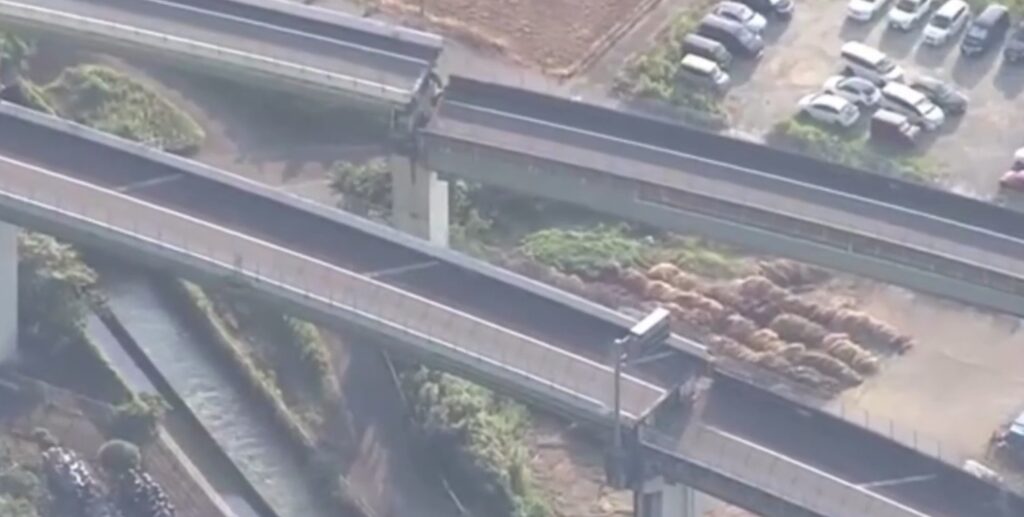
Loose concrete, broken glass, unstable roofs, and weakened bridges all create new hazards for rescue workers and residents alike.
This is why Japanese officials continue urging people to stay away from damaged buildings until engineers complete safety inspections.
Hospitals Face a Wave of Patients
Hospitals throughout the affected region quickly activated emergency disaster protocols.
Doctors, nurses, and emergency physicians worked around the clock treating injuries ranging from cuts and fractures to crush injuries caused by falling debris.
Patients arrived with:
- Broken arms and legs
- Head injuries
- Deep lacerations
- Burns
- Chest trauma
- Dehydration and heat exhaustion
Some hospitals also experienced temporary disruptions to utilities, making emergency operations even more challenging.
Medical workers who had already been on shift continued working long after their scheduled hours ended.
For many healthcare professionals, leaving simply wasn’t an option.
Their communities needed them.
Transportation Across Kyushu Suddenly Stopped
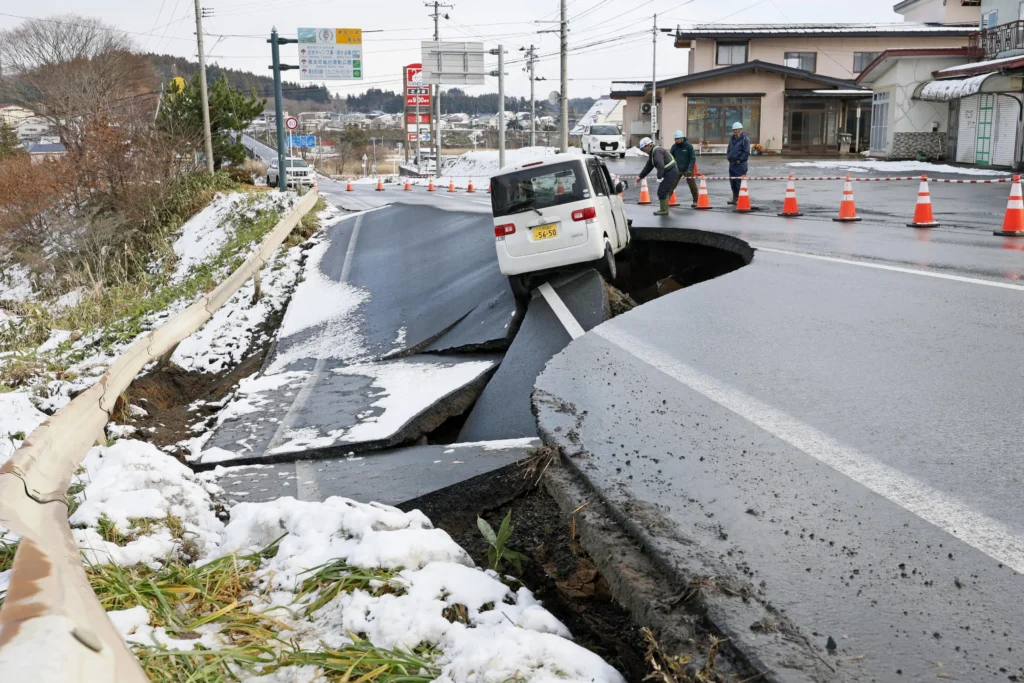
The earthquake didn’t only damage buildings.
It also disrupted daily life across one of Japan’s busiest regions.
High-speed rail services were halted almost immediately while engineers inspected tracks for damage.
Several local train routes suspended operations.
Road closures complicated rescue efforts.
Airport schedules were disrupted as officials carried out safety inspections.
For travelers, what began as an ordinary journey quickly turned into hours of uncertainty.
Some passengers remained stranded at stations waiting for updates.
Others canceled trips entirely as transportation networks struggled to recover.
Officials emphasized that these inspections, while inconvenient, are essential to preventing secondary disasters.
Japan’s transportation system is known for its remarkable safety standards, and every major earthquake triggers comprehensive structural evaluations before normal service resumes.
The Psychological Toll Is Only Beginning
Physical destruction is only one part of the disaster.
The emotional impact often lasts much longer.
Children awakened by aftershocks may develop anxiety about sleeping indoors.
Older adults who survived previous earthquakes often relive painful memories.
Families separated during the evacuation wait anxiously for confirmation that loved ones are safe.
For many residents of Kumamoto, this earthquake brought back memories of the devastating 2016 earthquakes that struck the same region.
Even years later, many survivors remember the fear of watching familiar neighborhoods collapse around them.
The latest disaster has reopened those emotional wounds.
Recovery will involve rebuilding homes and roads—but also helping communities heal from another traumatic experience.
A Story Still Unfolding
As rescue crews continue searching damaged neighborhoods and engineers inspect critical infrastructure, officials caution that casualty figures, damage assessments, and evacuation numbers may continue to change.
The coming hours remain crucial.
Every successful rescue brings hope.
Every aftershock brings renewed concern.
For Japan, the challenge is no longer simply surviving the earthquake.
It is navigating the difficult days that follow—when communities begin the long road toward recovery while never knowing exactly when the earth might shake again.
Rescue Teams Race Against Time as the Death Toll Continues to Climb
As daylight returned to southern Japan, the full scale of the destruction became impossible to ignore.
Entire neighborhoods were transformed into scenes of twisted steel, cracked concrete, and shattered glass. Apartment buildings leaned at dangerous angles. Homes that had stood for decades were reduced to piles of rubble. Roads were split apart, and utility poles lay across streets that only hours earlier had been filled with everyday traffic.
For rescue workers, the mission became painfully clear:
Find survivors before time runs out.
Emergency personnel worked through the night using heavy machinery, thermal imaging equipment, and specially trained search-and-rescue dogs to locate people believed to be trapped beneath collapsed structures. In many locations, crews were forced to work carefully by hand after detecting signs that survivors could still be alive beneath unstable debris.
The operation quickly became one of Japan’s largest disaster responses in recent years, involving firefighters, police officers, medical teams, the Japan Self-Defense Forces, and volunteer emergency organizations.
Every successful rescue brought cheers from exhausted crews.
Every unsuccessful search served as another heartbreaking reminder of the earthquake’s devastating power.
The Death Toll Continues to Rise
Officials have warned that casualty figures remain preliminary as emergency teams continue reaching areas that were initially inaccessible.
The number of confirmed deaths has steadily increased, while hundreds of people have been reported injured across the affected region. Authorities also continue searching for individuals reported missing after buildings collapsed during the earthquake.
Disaster experts note that casualty numbers often continue changing for days following a major earthquake as rescue operations progress and structural inspections uncover additional victims.
Hospitals throughout Kyushu remain under significant pressure.
Medical staff are treating patients with injuries including:
- Crush injuries caused by collapsed buildings
- Broken bones from falling debris
- Head trauma
- Burns
- Severe cuts and lacerations
- Dehydration and heat-related illnesses after extended evacuations
Many hospitals activated emergency disaster protocols within minutes of the quake, postponing routine procedures so medical teams could focus entirely on emergency patients.
For doctors and nurses, the work has become a nonstop effort measured in hours rather than shifts.
The AEON Shopping Mall Explosion That Shocked Japan
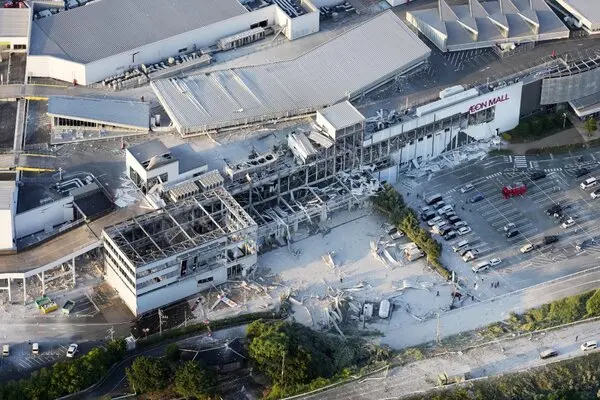
Among the many dramatic moments following the earthquake, one incident quickly captured nationwide attention.
A large AEON shopping mall in Kumamoto suffered a powerful explosion shortly after the earthquake struck.
Videos and photographs showed parts of the building’s exterior torn apart, with debris scattered across surrounding areas. Thick smoke rose above the complex as emergency responders rushed toward the scene.
Witnesses described hearing an explosion moments after the ground stopped shaking.
Authorities quickly evacuated nearby areas while firefighters worked to ensure that no secondary explosions would occur.
Although investigators believe a damaged gas line may have played a role, officials have stressed that the exact cause remains under investigation.
The incident highlights one of the lesser-known dangers following major earthquakes.
The shaking itself is only the beginning.
Broken gas pipes, damaged electrical systems, and compromised infrastructure can trigger fires, explosions, and other secondary disasters long after the initial quake ends.
This is why emergency officials often advise residents not to re-enter damaged buildings until utilities have been inspected and declared safe.
More Than 60 Aftershocks—and the Danger Isn’t Over Yet
One of the most unsettling aspects of the disaster has been the relentless series of aftershocks.
According to Japan’s Meteorological Agency, more than 60 aftershocks were recorded during the hours following the main earthquake.
Some were barely noticeable.
Others were powerful enough to send frightened residents running back outside.
For families attempting to rest inside evacuation shelters, every vibration served as another reminder that the disaster was far from over.
Experts explain that aftershocks occur because the Earth’s crust continues adjusting after a major fault rupture.
The largest earthquake releases enormous amounts of energy, but surrounding sections of the fault often continue shifting for days—or even weeks.
While most aftershocks gradually become weaker, there is always the possibility that one could be strong enough to trigger additional building collapses or landslides.
For that reason, authorities continue urging residents to:
- Stay away from damaged buildings.
- Follow official emergency alerts.
- Keep emergency supplies nearby.
- Charge phones and backup batteries whenever possible.
- Prepare for additional evacuations if conditions change.
Preparedness remains one of Japan’s most effective tools against ongoing seismic risks.
Hundreds of Thousands Forced From Their Homes
The earthquake displaced hundreds of thousands of people across southern Japan.
Schools, sports arenas, public halls, and community centers were rapidly converted into emergency shelters.
For many evacuees, daily routines disappeared overnight.
Instead of sleeping in their own bedrooms, families spent the night on cardboard partitions or blankets spread across gymnasium floors.
Volunteers distributed bottled water, food, blankets, hygiene supplies, and portable charging stations.
Children played quietly in designated areas while parents waited anxiously for updates about their homes.
Many residents still have no idea whether their houses remain structurally safe.
For elderly evacuees, the situation has been particularly difficult.
Many require medication, specialized medical equipment, or mobility assistance, making long-term shelter living especially challenging.
Authorities continue working to improve conditions inside evacuation centers while assessing when neighborhoods can safely reopen.
Transportation Across Southern Japan Remains Severely Disrupted
Modern transportation systems are built with earthquake safety in mind.
Even so, every major earthquake requires extensive inspections before services can resume.
Across Kyushu, transportation disruptions affected nearly every mode of travel.
High-speed Shinkansen services were suspended while engineers inspected tracks, tunnels, bridges, and overhead power systems.
Local railway lines experienced delays or temporary shutdowns.
Several highways were closed after inspectors identified cracks, fallen rocks, or potential landslide risks.
Airport operations also faced temporary disruptions as runways and terminal facilities underwent safety evaluations.
For international travelers visiting Japan during the busy summer season, many vacations suddenly turned into unexpected delays.
Airlines offered schedule changes while hotels assisted guests whose travel plans had been interrupted.
Although frustrating, transportation experts emphasize that Japan’s cautious inspection process has become one of the country’s greatest strengths in preventing additional tragedies after natural disasters.
Could Global Supply Chains Feel the Impact?
Whenever a major earthquake strikes Japan, economists quickly begin asking another important question:
Will global manufacturing be affected?
Japan remains a key producer of advanced electronics, automotive components, industrial machinery, semiconductors, and precision manufacturing equipment.
Following the earthquake, several manufacturers temporarily suspended production while engineers inspected factories for structural damage.
Employee safety became the immediate priority.
Production lines stopped as workers evacuated facilities and safety inspections began.
Even short interruptions can ripple through global supply chains.
Many international manufacturers rely on Japanese suppliers for highly specialized parts that cannot easily be replaced.
Depending on the extent of damage, analysts will be watching closely to determine whether shipping delays or production shortages emerge in the coming weeks.
For now, many companies have stated that operations will resume only after facilities have been confirmed safe.
Are Nuclear Power Plants Safe?
One of the first questions asked after every major Japanese earthquake is whether nuclear facilities have been affected.
The concern is understandable.
The 2011 Fukushima disaster permanently changed how the world views earthquakes and nuclear safety.
This time, however, Japanese regulators have reported no abnormalities at nearby nuclear facilities linked to the earthquake.
Emergency monitoring systems continue operating around the clock.
Engineers are inspecting reactors, cooling systems, electrical infrastructure, and surrounding facilities as part of standard post-earthquake safety procedures.
Although officials have emphasized that there is currently no indication of nuclear-related problems, monitoring efforts will continue until all inspections are complete.
The careful, transparent communication surrounding nuclear safety reflects lessons learned from previous disasters and remains essential for maintaining public confidence.
Eyewitness Stories Reveal the Human Side of the Disaster
Statistics tell only part of the story.
Behind every damaged building is a family.
Behind every rescue operation is a community hoping for good news.
Residents described hearing dishes shatter before they could even stand up.
Others said ceiling lights swung so violently they believed the roof would collapse.
One office worker recalled grabbing coworkers as everyone rushed toward emergency exits.
A shop owner watched years of inventory crash onto the floor within seconds.
Parents described carrying sleeping children outside while aftershocks continued beneath their feet.
For many survivors, the strongest memory won’t be the sound of collapsing buildings.
It will be the silence afterward—the tense moments when people looked around, counted family members, and realized how dramatically life had changed.
That emotional impact often lasts far longer than broken roads or damaged buildings.
The Next 72 Hours Could Define the Recovery
Disaster experts frequently describe the first three days after a major earthquake as the most critical period.
Search-and-rescue operations remain at their highest intensity.
Medical teams continue treating new patients.
Engineers inspect schools, hospitals, bridges, and public infrastructure.
Utility companies work around the clock restoring electricity, communications, and water services.
At the same time, government agencies begin planning the next phase:
Recovery.
That process can take months.
In some cases, it takes years.
For now, however, Japan remains focused on one mission above all else:
Saving as many lives as possible before the window for rescue closes.
Why Japan Experiences So Many Earthquakes
Whenever a major earthquake strikes Japan, one question quickly spreads across Google searches and social media:
“Why does Japan have so many earthquakes?”
The answer lies deep beneath the Earth’s surface.
Japan sits on one of the most seismically active regions on the planet, where four major tectonic plates meet:
- Pacific Plate
- Philippine Sea Plate
- Eurasian Plate
- North American (Okhotsk) Plate
These enormous plates are constantly moving—usually only a few centimeters each year.
That may sound insignificant, but over time, tremendous pressure builds along the boundaries where the plates collide.
Eventually, the rocks can no longer withstand the stress.
When that pressure is suddenly released, the Earth shakes.
That’s an earthquake.
Scientists estimate Japan experiences thousands of earthquakes every year. Fortunately, the overwhelming majority are too small for people to notice.
Only a small percentage become destructive disasters.
Still, Japan’s location means earthquakes are not unusual—they are an unavoidable part of everyday life.
How Japan Became One of the World’s Best-Prepared Countries
If there’s one nation that has transformed tragedy into preparedness, it’s Japan.
After decades of devastating earthquakes—including the 1995 Kobe Earthquake, the 2011 Great East Japan Earthquake, and the 2016 Kumamoto Earthquakes—the country invested heavily in disaster prevention.
Today, Japan is widely recognized as a global leader in earthquake preparedness.
That includes:
Earthquake Early Warning System
Millions of smartphones, televisions, and radio stations can receive emergency alerts just seconds before strong shaking begins.
Those few seconds may seem insignificant.
In reality, they can save countless lives.
People have just enough time to:
- Move away from windows
- Take cover beneath sturdy furniture
- Stop dangerous machinery
- Slow or stop high-speed trains
- Pause elevators at the nearest floor
- Prepare emergency responders
No warning system can predict earthquakes days in advance.
However, detecting the first seismic waves allows technology to warn nearby areas before the strongest shaking arrives.
Earthquake-Resistant Buildings
Japan’s modern skyline tells another remarkable story.
Many skyscrapers appear to sway during earthquakes.
That’s intentional.
Instead of resisting every movement, engineers design buildings to absorb and dissipate seismic energy.
Modern structures may bend, but they are far less likely to collapse.
Construction regulations have become increasingly strict over the past several decades.
As a result, many newer buildings survive earthquakes that would have devastated older construction.
Older buildings remain a greater concern, which is why structural inspections are so important after major disasters.
Earthquake Education Starts Young
Preparedness begins long before disaster strikes.
Japanese children practice earthquake drills from an early age.
Schools regularly teach students how to respond during emergencies.
Many workplaces conduct annual evacuation exercises.
Families often keep emergency kits containing:
- Drinking water
- Flashlights
- Portable radios
- First-aid supplies
- Batteries
- Emergency food
- Power banks
- Important documents
The goal isn’t to eliminate fear.
It’s to replace panic with preparation.
The Human Cost That Statistics Can’t Measure
News headlines often focus on numbers.
Deaths.
Injuries.
Collapsed buildings.
Power outages.
Those figures are essential.
But they never tell the whole story.
Behind every statistic is someone’s life.
A child separated from parents during an evacuation.
An elderly couple waiting outside a damaged home.
A rescue worker refusing to rest after searching for survivors throughout the night.
A family uncertain whether they’ll ever return to the house they’ve lived in for decades.
Natural disasters don’t only destroy buildings.
They interrupt birthdays.
Cancel weddings.
Close schools.
Separate communities.
Change futures.
Many survivors say the emotional recovery lasts far longer than rebuilding physical structures.
For children especially, repeated aftershocks can create lasting anxiety long after damaged roads have been repaired.
Mental health support often becomes an essential part of long-term disaster recovery.
The Internet Can Be Helpful—But Also Misleading
Major disasters unfold in real time across social media.
Within minutes of the earthquake, platforms such as X, TikTok, Facebook, Instagram, and YouTube were flooded with dramatic videos.
Some clips showed genuine footage captured by residents.
Others were years old.
Some had nothing to do with Japan.
A growing number were created using artificial intelligence.
During fast-moving disasters, misinformation spreads almost as quickly as the news itself.
Some viral posts falsely claimed:
- Massive tsunamis had already destroyed coastal cities.
- Entire regions had disappeared.
- Nuclear facilities had exploded.
- Additional giant earthquakes were guaranteed within hours.
None of these claims were supported by official authorities.
Experts recommend verifying information through trusted organizations before sharing dramatic videos or alarming posts.
Reliable sources include:
- Japan Meteorological Agency (JMA)
- Local government emergency agencies
- Major international news organizations
- Official emergency management accounts
Responsible reporting becomes especially important when millions of people are searching for accurate information.
What Travelers Should Know
Japan remains one of the world’s safest destinations for international visitors, even after major natural disasters.
However, travelers should stay informed when visiting affected regions.
If you’re currently in Japan—or planning to travel soon—consider these precautions:
Monitor Official Updates
Transportation schedules can change rapidly following earthquakes.
Check updates from airlines, railway operators, and local authorities before traveling.
Prepare for Delays
Even when no visible damage exists, engineers inspect bridges, tunnels, railway tracks, and airport facilities before reopening services.
Safety always comes first.
Keep Emergency Notifications Enabled
Most modern smartphones can receive emergency alerts in Japan.
Avoid disabling these notifications while traveling.
Know Your Hotel’s Emergency Procedures
Upon arrival, take a few minutes to locate:
- Emergency exits
- Stairwells
- Assembly points
- Evacuation instructions
A few minutes of preparation can make a significant difference during an emergency.
What the World Can Learn From Japan
Every major earthquake becomes a reminder that disasters can happen almost anywhere.
Japan’s response demonstrates several lessons that other countries continue studying:
Preparation saves lives.
Strict building codes matter.
Emergency drills matter.
Public education matters.
Rapid communication matters.
No country can stop earthquakes.
But every country can improve its ability to respond.
Climate disasters, hurricanes, wildfires, floods, and earthquakes all share one common lesson:
Communities recover faster when preparation begins long before disaster strikes.
Frequently Asked Questions (FAQ)
Where did the Japan earthquake happen?
The earthquake struck near Kumamoto Prefecture on Japan’s southern island of Kyushu, one of the country’s most earthquake-prone regions.
Why does Japan have so many earthquakes?
Japan sits on the Pacific Ring of Fire, where multiple tectonic plates meet and continuously shift beneath the Earth’s surface.
Are aftershocks dangerous?
Yes.
Aftershocks can trigger additional building collapses, landslides, and infrastructure damage, especially in structures already weakened by the main earthquake.
Was there a tsunami?
Official tsunami advisories and warnings can change rapidly after major earthquakes. Travelers and residents should always follow updates from Japan’s Meteorological Agency and local authorities rather than relying on social media rumors.
Are Japan’s nuclear power plants safe?
According to Japanese regulators, no abnormalities were initially reported at nearby nuclear facilities following the earthquake. Monitoring and inspections continue as part of standard safety procedures.
Should tourists cancel trips to Japan?
Not necessarily.
Japan has extensive disaster-response systems, and many areas remain unaffected. Travelers should monitor airline notifications, transportation updates, and local government advisories before making decisions.
Can scientists predict earthquakes?
No.
Modern science cannot predict the exact time, location, or magnitude of future earthquakes.
However, earthquake early warning systems can detect seismic waves immediately after a rupture begins and provide several seconds of warning before the strongest shaking reaches nearby locations.
Why This Earthquake Matters Beyond Japan
This isn’t simply a story about one country.
It is a reminder of how interconnected today’s world has become.
A powerful earthquake in Japan can affect:
- International tourism
- Global manufacturing
- Automotive production
- Electronics supply chains
- Financial markets
- Airline operations
- Shipping logistics
Businesses around the world will continue monitoring recovery efforts over the coming weeks.
Investors, manufacturers, and travelers alike understand that Japan plays a vital role in the global economy.
A Nation That Continues to Inspire
History has shown something remarkable about Japan.
Again and again, communities have faced earthquakes, tsunamis, volcanic eruptions, and typhoons.
Again and again, they have rebuilt.
Neighbors help neighbors.
Volunteers arrive from across the country.
Emergency workers continue long after television cameras leave.
Schools reopen.
Businesses recover.
Communities heal.
Recovery isn’t measured only by repaired roads or reconstructed buildings.
It’s measured by resilience.
By compassion.
By the determination to move forward together.
That spirit has become one of Japan’s defining strengths.
Final Thoughts
The 2026 Japan earthquake is still a developing story, and many details—including casualty figures, infrastructure damage, and recovery timelines—may continue to evolve as authorities complete rescue operations and assessments.
For now, one fact remains clear:
Behind every headline is a family waiting for good news, a rescue worker refusing to give up, and a community beginning the difficult journey toward recovery.
The world will continue watching—not only because of the scale of the disaster, but because Japan’s response once again demonstrates the resilience, preparation, and solidarity that have inspired people around the globe.
As rescue efforts continue and aftershocks remain possible, staying informed through verified sources—and supporting those affected whenever possible—will be more important than ever.